Ten Indian Firms Bid for IAF's Rs 30,000 Crore, 87-UAV Tender
Ten domestic firms have bid for the Indian Air Force's 87-UAV programme worth over Rs 30,000 crore — a field wide enough to test whether India's private drone base can absorb, and survive, a contest this large.

Senapathi Desk
Staff reports & analysis
Published
3 min read
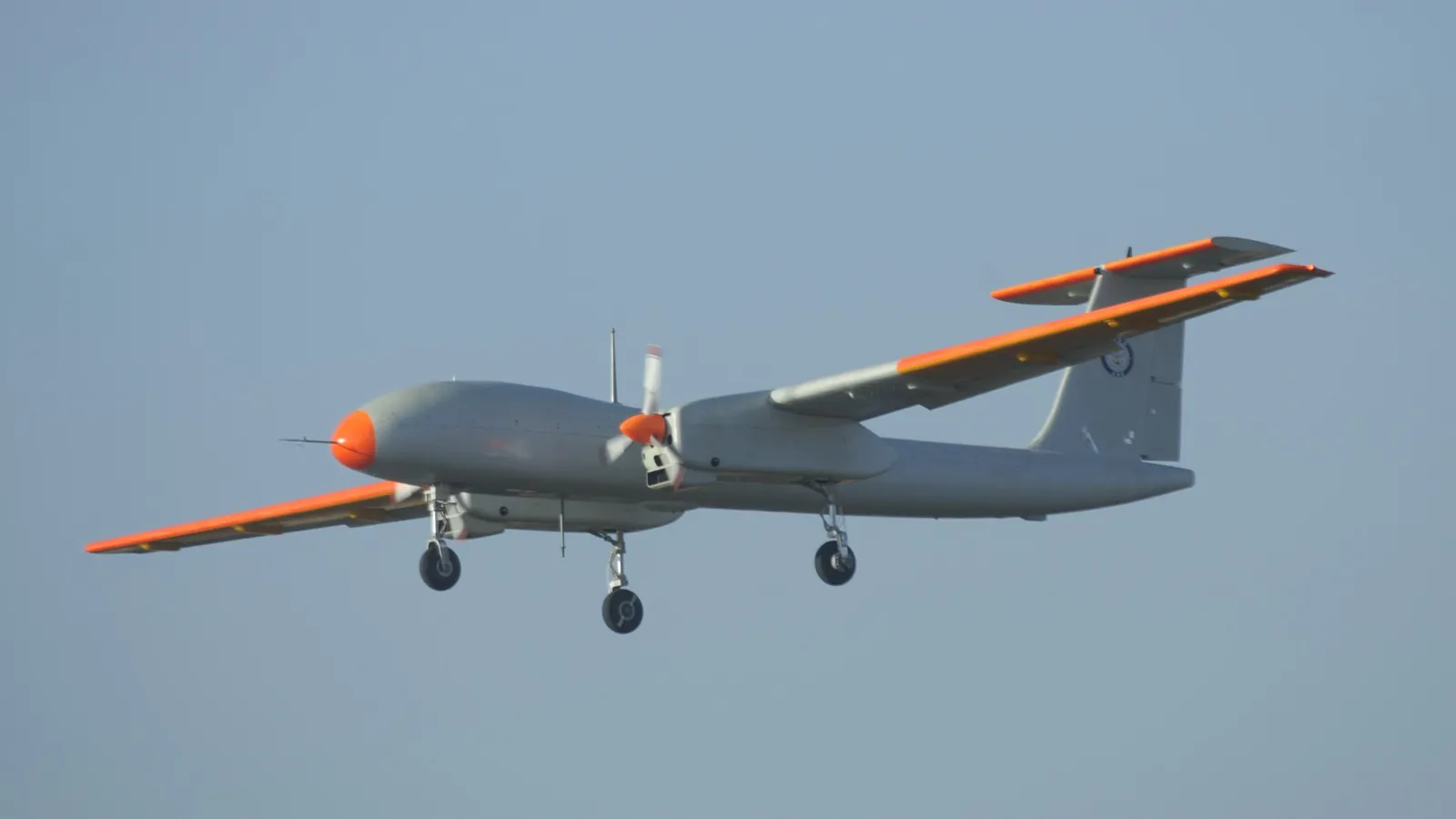
Ten bids for one tender. When the Defence Ministry closed submissions for the Indian Air Force’s 87-aircraft unmanned aerial vehicle programme — a contract valued at over Rs 30,000 crore — it received offers from ten Indian firms. The number of aircraft is modest by the standards of manned fleets. The number of bidders is not. It is the clearest signal yet that India’s drone industrial base has moved past the proof-of-concept stage and into genuine competition.
Start with the incentive the tender creates. A Rs 30,000 crore prize concentrated in a single programme does something a hundred small orders cannot: it forces firms to commit capital before they have revenue. Companies bidding at this scale must line up production facilities, supplier networks and flight-test capacity on the assumption that they might win. Even the eight or nine that eventually lose will have built organisational muscle — design teams retained, vendor relationships formed — that would not exist without the pull of the tender. That is the quiet, second-order benefit of large anchor programmes: they capitalise an ecosystem, not just a winner.
The programme itself is aimed at strengthening India’s surveillance and combat capabilities, and the timing is not incidental. Recent conflicts have made unmanned systems the most closely watched category in air power, and every serious air force is now recalibrating how much of its reconnaissance-and-strike burden should shift to platforms it can afford to lose. For the Indian Air Force, buying 87 such aircraft from domestic vendors is a statement that this recalibration will be done with Indian industry rather than around it.
The constraint hiding inside the competition
A field of ten is a strength at bid stage and a problem afterwards. Only one — or at best a small handful — can win, and the Indian market cannot yet sustain ten drone majors on domestic orders alone. The losers face a choice between exports, subsystems work for the winner, or exit. How the eventual selection is structured will therefore matter as much as who wins it. A contest decided purely on the lowest price risks rewarding the most aggressive bid rather than the most executable one; a programme this large can ill afford a winner that underpriced its way into delivery trouble. The Defence Ministry’s real test is not picking a vendor but designing an outcome in which the runners-up remain in the industry.
There is also a concentration risk on the buyer’s side. Sinking Rs 30,000 crore into one programme raises the cost of that programme slipping. Unmanned platforms evolve fast; a fleet ordered today must be built around architectures open enough to absorb the sensors and munitions of five years from now, or the Indian Air Force will own a large, young and already dated inventory.
The context makes the stakes legible. India’s defence production reached an all-time high of Rs 1.78 lakh crore in 2026, with private firms driving much of the growth. That record was built largely on components, ammunition and subsystems. Tenders like this one are how the private sector graduates from supplier to prime — from feeding platforms to delivering them. Ten firms believe they are ready for that graduation. The decision that follows will reveal how many actually are, and whether India can convert a record production year into something harder: a durable, competitive base for the unmanned age.
Sources
Senapathi Desk
Staff reports & analysis
The Senapathi Report news desk. Original reporting and analysis synthesised from multiple corroborated sources — defence procurement, service developments and regional security, filed as it happens.