GSLV-F17 Lofts EOS-05, India's First Imaging Satellite Bound for Geosynchronous Orbit
GSLV-F17 flew from Sriharikota at 02:55 IST on 4 September and put the 2,367 kg EOS-05, India's first imaging satellite from geosynchronous orbit, into transfer orbit, ending a seven-month launch pause and redeeming the 2021 EOS-03 loss.

Senapathi Desk
Staff reports & analysis
Published
3 min read
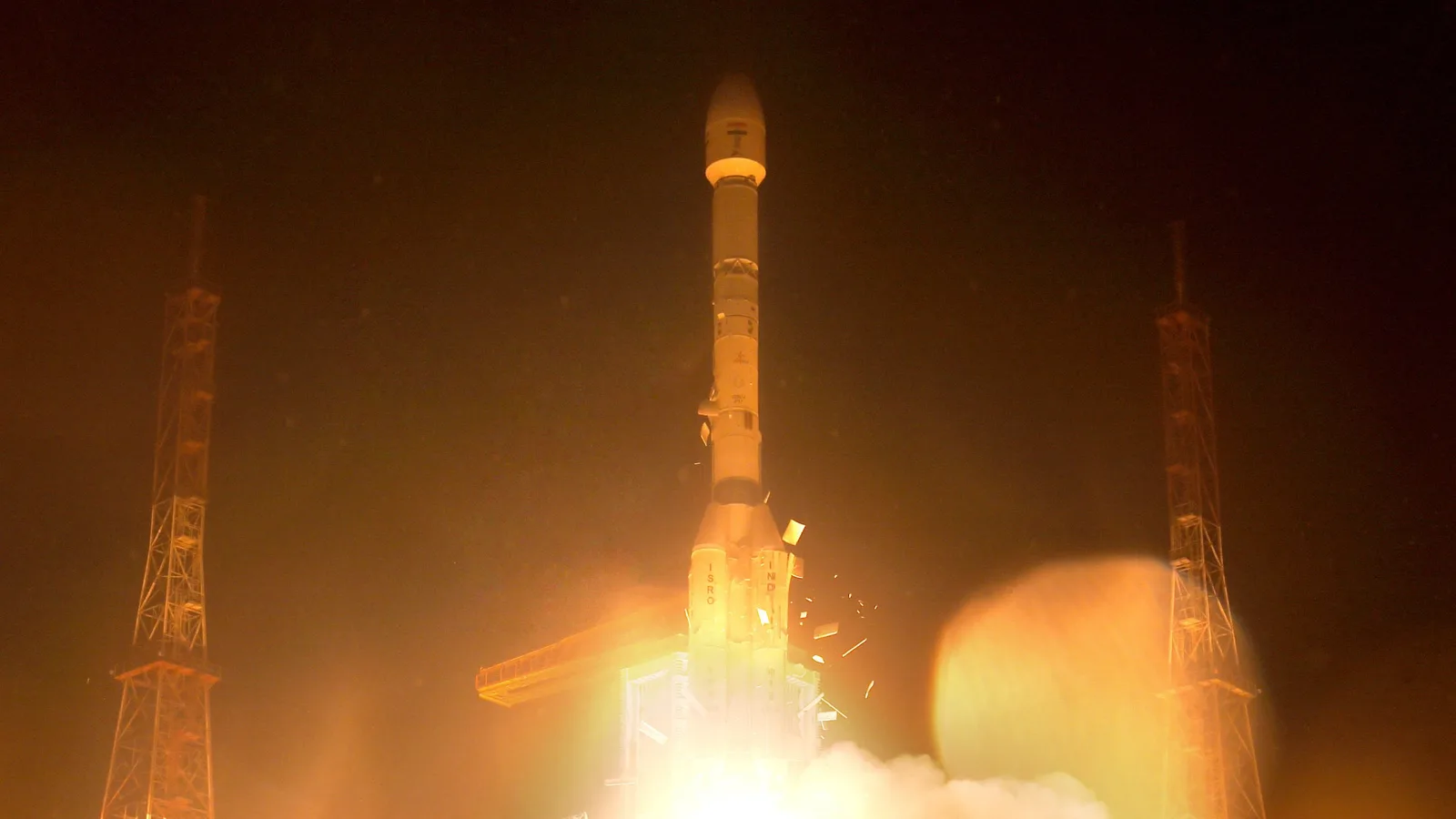
At 02:55 on the morning of 4 September, GSLV-F17 cleared the Second Launch Pad at the Satish Dhawan Space Centre in Sriharikota and, about eighteen minutes later, released EOS-05 into a sub-geosynchronous transfer orbit. The mission sheet reads tidily: the 19th flight of the GSLV, the 107th launch from Sriharikota, a 2,367 kg spacecraft that ISRO chairman V. Narayanan described as the heaviest satellite the vehicle has ever carried into transfer orbit. The significance is less tidy. India had never before sent an imaging satellite on the road to geosynchronous orbit, and the last time it tried, the rocket failed.
That failure was GSLV-F10 in 2021. It carried EOS-03, the earlier attempt at the same kind of spacecraft, and lost it 307 seconds into flight when, in ISRO’s own words, “an anomaly in the Cryogenic Upper Stage” ended the mission. A failure in that stage was more than the loss of one satellite; it was a question mark over the vehicle itself. This flight is the answer that only comes from flying. A cryogenic stage of the same type carried the heaviest payload the GSLV has ever lifted to transfer orbit, under a 4 m diameter Ogive composite fairing, and put it where it was meant to go.
Why geosynchronous changes the picture
Every imaging satellite India has flown until now has watched the country in passes: sweep a strip, move on, return when the orbit brings it back. That is the discipline of low orbit, and it is good for detail but poor for continuity. A satellite in geosynchronous orbit keeps station over the same longitude, so instead of visiting, it stays. ISRO’s description of EOS-05 as “India’s first ever imaging satellite from Geosynchronous orbit” is therefore not promotional copy; it marks a change in kind. Narayanan called it “the eye in the sky” and said it will become “India’s first dedicated imaging satellite in geo-orbit, providing strategic data for the country”.
The uses ISRO lists are civil: real-time imagery for agriculture and disaster management. Take those at face value and they already justify the mission. A cyclone crossing the Bay of Bengal or a flood pulse moving down a river is a fast-moving event, and a satellite that revisits every few days is of limited help while it is happening. But the word “strategic” in the chairman’s remark is doing honest work too. A persistent stare over the subcontinent and its maritime periphery is exactly the capability a country wants when it needs to know continuously, rather than periodically, what is moving on its borders and in its near seas. What EOS-05 can actually resolve from geosynchronous altitude is not something ISRO has stated, and this column will not guess. The point is that the platform now exists.
The vehicle, and the year
There is a second story here, about cadence. This was ISRO’s first successful mission of 2026, and it ends a launch pause that had stretched to seven months. For an agency that measures its standing partly in how often it flies, a year that had produced nothing until September was becoming a story of its own. Placing 2,367 kg into transfer orbit on the GSLV’s 19th flight does not erase that gap, but it changes the tone of the calendar.
Note, too, what “sub-geosynchronous transfer orbit” means: the job is not finished. The spacecraft must now climb to its final station on its own propulsion before imaging can begin, and it will be the performance of the payload over the coming months, not the launch, that decides whether “the eye in the sky” earns its name.
Prime Minister Narendra Modi called the launch “yet another outstanding achievement by ISRO and a proud moment for our nation” and repeated the line that will follow this mission: “India’s first-ever imaging satellite from Geosynchronous orbit.” Firsts are easy to celebrate and hard to sustain. EOS-05, also designated GISAT-1A, has redeemed a failure. The harder task is to make continuous imaging of India’s own neighbourhood an ordinary fact of national life.
Sources
- 1. ISRO: GSLV-F17 / EOS-05 mission page — isro.gov.in
- 2. Outlook: ISRO chairman hails GSLV-F17 launch as EOS-05 reaches orbit — outlookindia.com
- 3. The Week: ISRO launches GSLV-F17 carrying EOS-05 — why it is a milestone for India — theweek.in
- 4. The Hindu: GSLV-F17 / EOS-05 launch from Sriharikota, 4 September — live updates — thehindu.com
Senapathi Desk
Staff reports & analysis
The Senapathi Report news desk. Original reporting and analysis synthesised from multiple corroborated sources — defence procurement, service developments and regional security, filed as it happens.