Safran-GTRE AMCA Engine Venture Reaches CCS; Clearance Reported Within Days
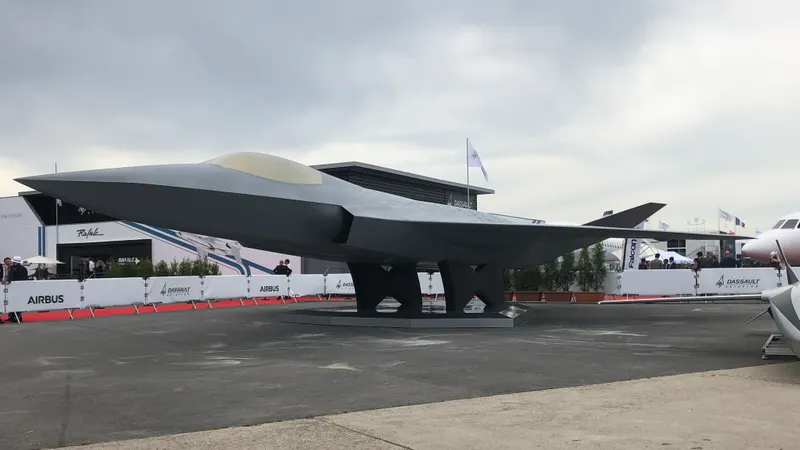
The Safran-GTRE joint venture for a ~120 kN AMCA Mk2 fighter engine with full Indian IP is reported before the Cabinet Committee on Security, with clearance expected by 15 August — a timeline that still awaits official confirmation.

Senapathi Desk
Staff reports & analysis
Published
3 min read
India’s longest-running defence-technology gap — a home-grown fighter engine — may be days from its most consequential decision. The proposed joint venture between France’s Safran and the Gas Turbine Research Establishment (GTRE) to develop the powerplant for the AMCA Mk2 stealth fighter has reached the Cabinet Committee on Security, an Indian daily reported on 3 August, with clearance expected before 15 August.
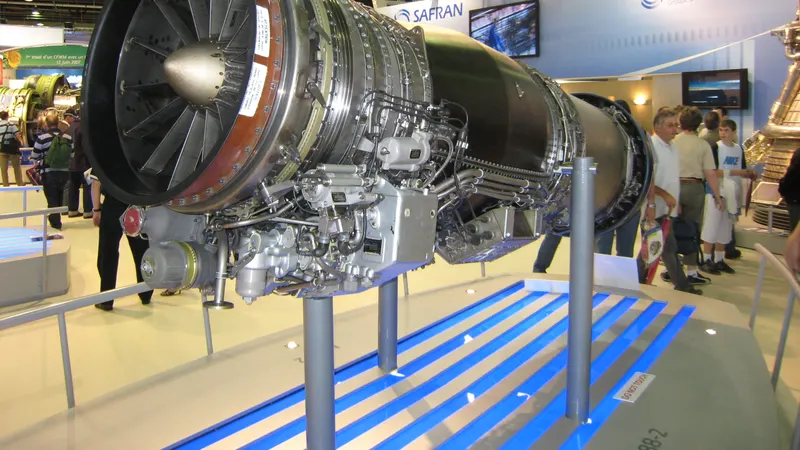
The proposal on the table is for a clean-sheet engine in the 110–130 kN thrust class, generally stated at around 120 kN in its initial form, with an uprated variant toward 140 kN planned for later. Nine prototype engines are to be built and carried through certification. The powerplant is intended for the Mk2 version of the Advanced Medium Combat Aircraft, the stealth fighter at the centre of India’s fifth-generation combat aviation programme.
Two terms distinguish this arrangement from every foreign engine partnership India has weighed before. The first is ownership: India is reported to retain 100 per cent of the intellectual property rights on the jointly developed engine. The second is depth of transfer: the deal is described as a complete handover of technologies, including the critical hot section — the high-temperature core of a jet engine that foreign manufacturers have historically kept off the table in transfer offers, and the single hardest piece of the discipline for any country to master alone. Full IP would leave India free to modify, uprate, and build on the design without a partner’s consent — the difference between owning an engine and owning an engine capability.
Reporting on 5 August added further contours. The proposal is said to include a 100 per cent transfer of technology to Indian engineers, a development timeline of 10 to 12 years, and Hindustan Aeronautics Limited as the manufacturing partner — placing design work with the GTRE-Safran combination and series production within India’s established aerospace industrial base.
The price remains the least settled detail. One account puts the programme’s cost at over Rs 30,000 crore; others cite roughly Rs 61,000 crore — about USD 7 billion — spread over more than a decade. No official figure is on record, and the gap between the estimates is unlikely to close before the government itself speaks.
That is the caveat that hangs over the whole story. The mid-August timeline traces to a single report of 3 August, and as of the follow-up coverage of 5 August, the Cabinet Committee on Security had made no official announcement of final approval. Every operative detail — the thrust class, the IP terms, the prototype count, the clearance date — currently rests on attributed reporting rather than a government release. The reported deadline of 15 August, Independence Day, would give any announcement obvious symbolic weight, which is itself a reason to treat the date with care until it is confirmed.
Still, the direction of travel is hard to miss. The long-running contest to power the AMCA Mk2 drew rival co-development offers from the world’s few surviving fighter-engine houses, and a file reaching the Cabinet Committee on Security — the final approval authority for India’s major defence programmes — is the furthest any such proposal has travelled. If cleared on the terms reported, the venture would commit India and France to a decade-plus engineering partnership whose stated end state is an Indian-owned combat engine in the 120 kN class, certified on nine prototypes and manufactured at home.
For a programme that has spent years in the language of bids, pledges, and percentages, the decisive question has narrowed to a single event on a single calendar. Until the government speaks, the Safran-GTRE venture remains what it has been all month: reported in detail, awaited officially, and unconfirmed.
Sources
- 1. Safran-GTRE engine partnership for AMCA Mk2 nears CCS approval — indianmasterminds.com
- 2. Safran-GTRE AMCA engine deal nears Cabinet Committee on Security clearance — idrw.org
- 3. India nears breakthrough with Safran on AMCA engine — indiandefensenews.in
- 4. Safran-GTRE AMCA Mk2 engine project: terms and timeline — meta-defense.fr
- 5. Discussion: Safran-GTRE clearance expected ahead of 15 August 2026 — defence.in
- 6. India moves closer to approving Safran-GTRE fighter engine JV — timesofoman.com
Senapathi Desk
Staff reports & analysis
The Senapathi Report news desk. Original reporting and analysis synthesised from multiple corroborated sources — defence procurement, service developments and regional security, filed as it happens.