India Moves to Join France-Led FCAS: What a Sixth-Generation Bet Means for AMCA
The Defence Ministry has 'initiated efforts' to co-join the France-led FCAS sixth-generation fighter programme, a parliamentary panel reveals — weeks after France and Germany parted ways. What the move means for the IAF and the AMCA.

Senapathi Desk
Staff reports & analysis
Published
3 min read
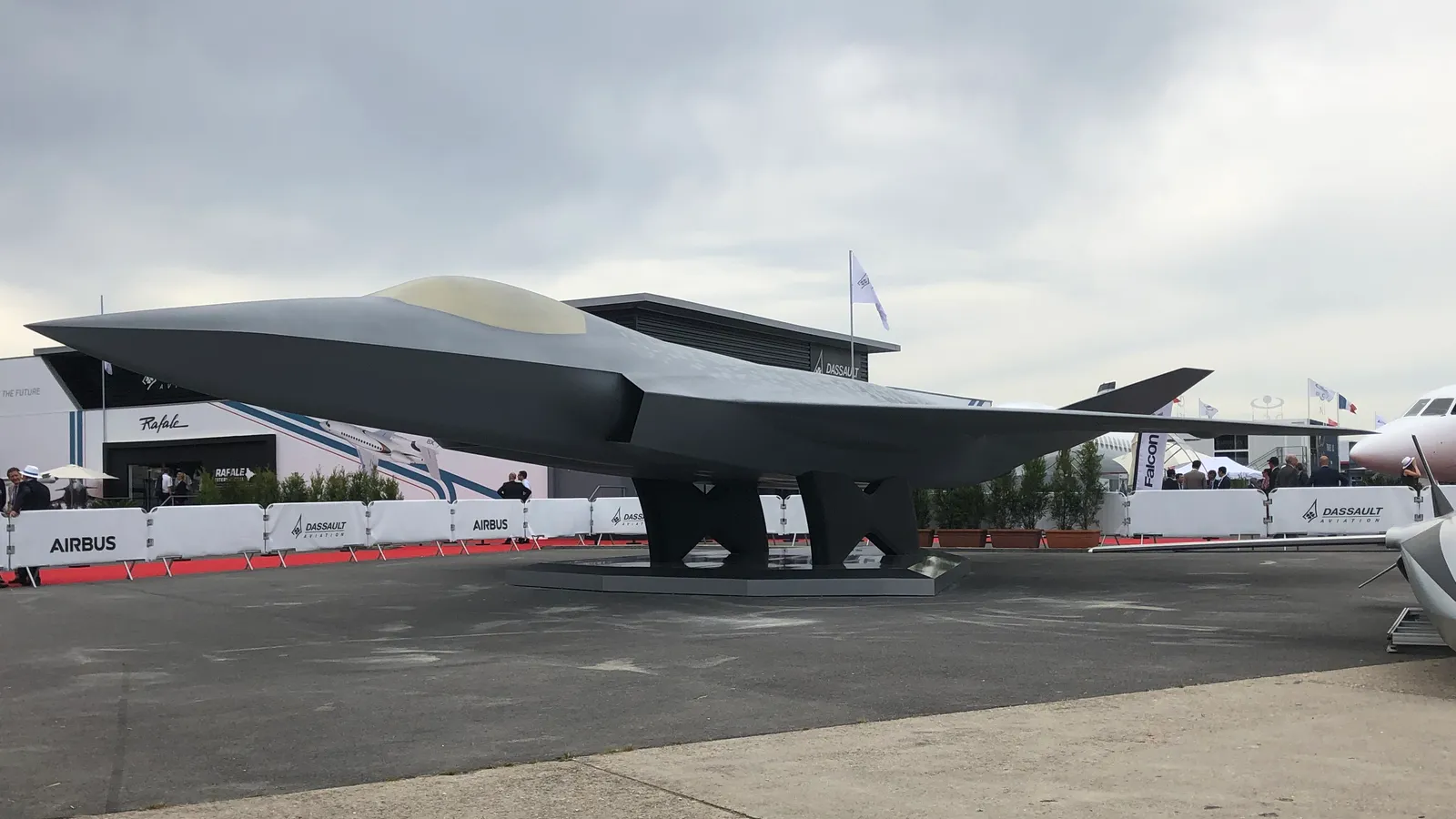
The most consequential sentence in Indian military aviation this year was not spoken at an air show or a podium. It sits in the paperwork of the Parliamentary Standing Committee on Defence, where the Ministry of Defence’s Action Taken Reply to the panel’s 25th report records that the ministry “has initiated efforts in a concerted manner to co-join the 6th Generation Fighter Aircraft Development Programme” — the France-led Future Combat Air System. One line, buried in a committee document, and India is formally on record pursuing a seat in a sixth-generation fighter project for the first time.
The timing is what gives that line its charge. In June, France and Germany abandoned their joint FCAS effort after years of friction between Dassault Aviation and Airbus over workshare and programme leadership finally proved terminal. France signalled it was prepared to carry the project forward alone, or with new partners. Two months later, India’s defence ministry says it has begun concerted efforts to join. The sequence is hard to read as coincidence: a chair emptied at the top table of European combat aviation, and India has moved toward it.
The parliamentary panel that drew out the disclosure did more than relay it. Its report identifies FCAS and the British-Italian-Japanese Global Combat Air Programme as the two principal sixth-generation projects now underway, and warns that delayed participation could leave the Indian Air Force technologically disadvantaged. It has asked the ministry for a detailed status report on sixth-generation aircraft development, a roadmap, and a tentative acquisition timeline. Translated from committee language: intent has been noted, now show the plan.
Everything else hangs on what “co-join” turns out to mean. Entering a fighter programme at the development stage is a fundamentally different proposition from buying an aircraft off a production line decades later. Development partners help shape requirements, claim workshare for their industry, and sit inside the technology rather than at the receiving end of it. That is the prize, and it is precisely why such partnerships are brutal to negotiate. The Franco-German split is itself the cautionary tale: two of Europe’s most capable aerospace nations could not settle who leads and who builds what. Any new entrant, India included, walks into the same unresolved questions — with the added complication that France, having just fought one battle over design authority, is unlikely to be generous in the next one. The strength of India’s hand is that France now needs partners to share a programme of this scale; the weakness is that India needs the technology more than France needs any single partner.
Then there is the question the disclosure immediately raises at home: what becomes of the AMCA, the indigenous fifth-generation fighter that anchors the Indian Air Force’s long-term combat roadmap? The reflexive worry — that a sixth-generation bet abroad makes the fifth-generation project at home redundant — gets the logic backwards. Specialists assessing the disclosure argue the AMCA remains relevant and would complement sixth-generation capabilities rather than compete with them, including through manned-unmanned teaming, where a crewed fighter operates as the node for collaborative uncrewed aircraft. Programmes of this class also run on long horizons; a development effort joined now is an answer to the air force’s needs deep into the future, not a substitute for the fighter meant to fill the gap before it. If anything, the two efforts reinforce each other: the industrial base the AMCA is building is the only credible ticket India can present for meaningful workshare in anyone’s sixth-generation project.
The risk worth naming is the opposite one — that a glamorous foreign partnership drains attention, money and political capital from the indigenous programme, repeating a familiar pattern in Indian defence procurement where the imported option crowds out the domestic one. That is why the committee’s demands are the right frame for judging what follows. “Initiated efforts” is a phrase, not a commitment. The tests are concrete: does a roadmap appear, does it carry a timeline, and does it define India’s role in terms of workshare and technology access rather than membership for its own sake? A sixth-generation seat won on those terms would be a genuine strategic gain. Anything less would be an announcement. The committee has asked the right question; the ministry now owes parliament — and the air force — the answer.
Sources
Senapathi Desk
Staff reports & analysis
The Senapathi Report news desk. Original reporting and analysis synthesised from multiple corroborated sources — defence procurement, service developments and regional security, filed as it happens.