Rafael in Talks With Indian Private Firms to Build Iron Dome's Tamir Interceptors
Israel's Rafael is negotiating with multiple Indian private-sector defence firms to manufacture the Iron Dome's Tamir interceptor in India, with output earmarked for Israeli domestic demand and export orders.

Senapathi Desk
Staff reports & analysis
Published
3 min read
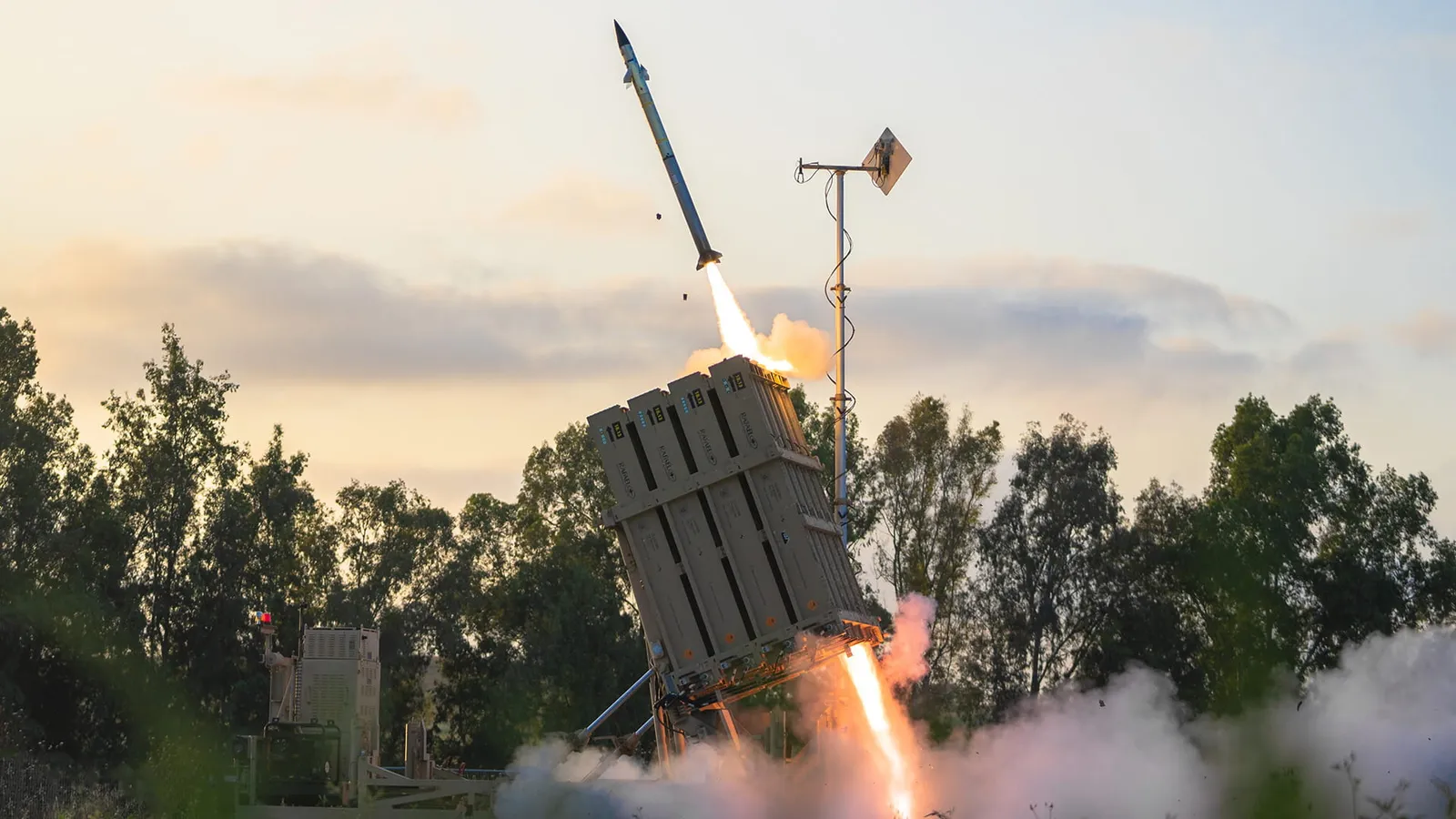
Few missiles anywhere are fired as often, or replaced as urgently, as the Tamir — the interceptor that arms Israel’s Iron Dome. So when Rafael Advanced Defense Systems, the system’s maker, opens negotiations with Indian companies to build that missile in India, the story is bigger than a single contract. It is about India being invited onto the production line of one of the most combat-proven munitions of the modern era.
Here is what is actually on the table. Rafael is in talks with multiple private-sector defence firms in India to set up domestic manufacturing of the Tamir, according to reporting dated 29 June. No partner has been named and nothing has been signed; these are negotiations, not an agreement. But the stated purpose is striking: an Indian line would produce interceptors to meet Israel’s own domestic demand as well as export orders — not merely to serve a future Indian requirement.
Why Israel Needs Factories Abroad
To understand why, start with how Iron Dome works. The system exists to defeat short-range threats — rockets, artillery and drones — and it does so by expending interceptors. The radars and launchers endure from one engagement to the next; the Tamir is the consumable, burned through in quantity every time the system is used in anger. Years of sustained operational use, combined with interest from foreign buyers, mean the constraint on the system today is not its design but the rate at which its ammunition can be produced.
When demand outruns capacity, a manufacturer has two options: expand at home or add production lines abroad. That Rafael is exploring the second option in India says something about both sides — Israel’s need for volume it cannot quickly build alone, and India’s standing as a country with the industrial depth, engineering workforce and cost base to make precision munitions at scale.
What India Would Get
For India, the attraction runs well beyond factory jobs. The country has spent the past decade assembling a layered air-defence architecture — long-range systems such as the S-400 at the top, Israeli-partnered and indigenous missiles filling the tiers below. The tier the Tamir occupies, high-volume interceptors against cheap rockets and drones, is precisely the layer that modern conflicts consume fastest. A domestic Tamir line, even one initially feeding Israeli and export demand, would plant that capacity on Indian soil: the tooling, the trained workforce, the qualified supplier chain that a sovereign interceptor industry is built from.
It matters, too, that the talks are with private firms rather than state-owned manufacturers alone. A missile joint venture of this kind would be a meaningful vote of confidence in India’s private defence sector, which the government has been pushing to take on exactly this sort of complex munitions work.
The caveats are real. Which firms are involved, how deep the workshare would go — final assembly or genuine component production — and whether India itself eventually buys the interceptor are all questions the talks have not yet answered publicly. Negotiations over sensitive technology can stall on transfer terms, and this one is at an early stage.
But the direction of travel is clear enough. Israel needs production volume; India wants the industrial base beneath its air defences. If the two close the gap on terms, one of the world’s most-fired interceptor missiles will carry an Indian address.
Sources
Senapathi Desk
Staff reports & analysis
The Senapathi Report news desk. Original reporting and analysis synthesised from multiple corroborated sources — defence procurement, service developments and regional security, filed as it happens.