Project Kusha Takes Flight: India's Indigenous Answer to the S-400 Passes First Test
DRDO's Kusha long-range interceptor made its maiden flight from Abdul Kalam Island on 23 July, destroying an electronic target simulating a high-speed, high-altitude threat — first hardware proof of India's indigenous S-400-class shield.

Senapathi Desk
Staff reports & analysis
Published
3 min read
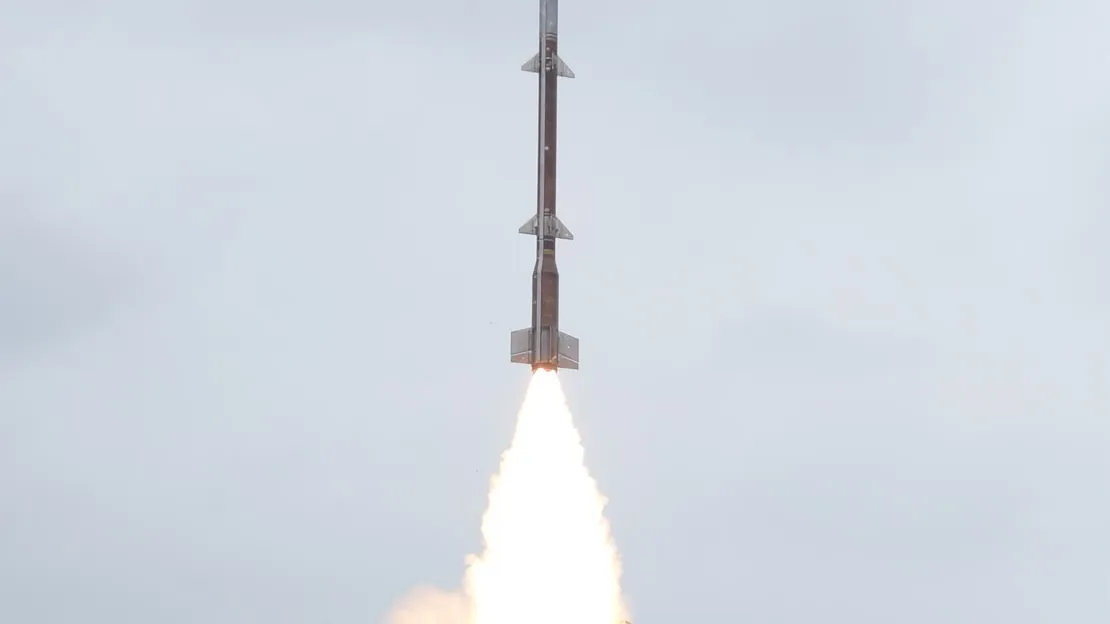
Somewhere over the Bay of Bengal on 23 July, a threat that did not exist met a missile that very much does. The Defence Research and Development Organisation flew its Kusha long-range surface-to-air missile for the first time from Dr APJ Abdul Kalam Island off the Odisha coast, steering the interceptor against an electronic target that mimicked a high-speed aircraft at high altitude. The missile intercepted its simulated quarry — and with that, a programme that has lived for years in sanction orders, budget lines and exhibition models finally became flying hardware.
The maiden test mattered less for the single interception than for everything operating around it. Every element of the weapon system — the missile itself, the radars that tracked the target and the command-and-control centre that ran the engagement — was developed by DRDO laboratories with Indian industry partners. In long-range air defence, that integration is the hard part. The interceptor is only ever as good as the sensor and battle-management chain behind it, and this first flight exercised that chain end to end.
Defence Minister Rajnath Singh called the flight “an important milestone in Indian defence R&D” and described the capability as one “possessed only by a handful of nations”. Defence Secretary Rajesh Kumar Singh congratulated the teams behind the test. According to the official announcement, the system is built to neutralise fighter jets, missiles, unmanned aerial vehicles and large enemy aircraft across a wide envelope of range and altitude.
Project Kusha is India’s attempt to build at home the class of capability it currently imports. The programme — known in earlier iterations as the extended-range surface-to-air missile, or XRSAM — was cleared for development in May 2022, and in September 2023 the government approved the procurement of five squadrons for the Indian Air Force at an estimated cost of about ₹21,700 crore. Reporting around the programme describes a family of three interceptors, designated M1, M2 and M3, with ranges of roughly 150, 250 and 350 kilometres, allowing a single system to stack successive engagement rings around a defended area.
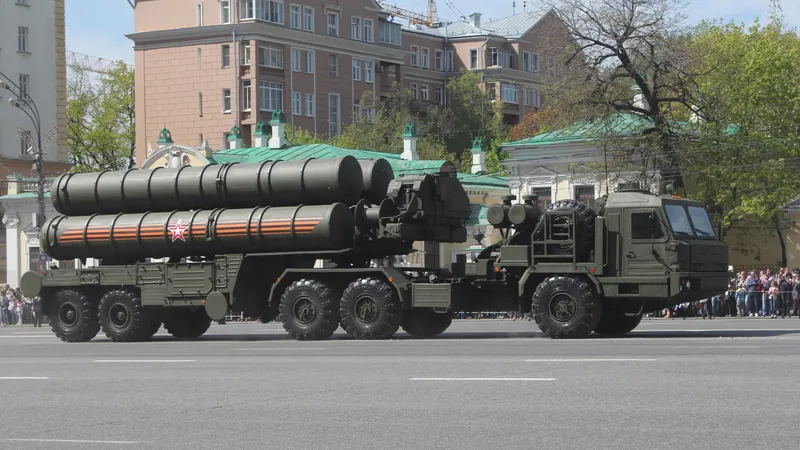
That stack has a specific place in India’s layered air-defence architecture. The short and medium tiers are held by the Akash family and by the medium-range surface-to-air missile developed jointly with Israel, which reaches out to roughly 80 kilometres. The outermost tier today belongs to the S-400 squadrons bought from Russia — a system with formidable reach, but one that ties India’s most critical air-defence layer to a foreign production line for spares, upgrades and replenishment, and exposes it to the sanctions politics surrounding Russia’s defence exports. Kusha is designed to occupy that same long-range tier with hardware answerable to no supplier abroad.
A first flight against an electronic target is a beginning, not a verdict. Simulated targets let designers validate propulsion, guidance, datalinks and the full kill chain without the cost and constraints of a live aerial target. The harder proof — intercepts of real target drones and missile-class threats across the full range-and-altitude envelope — still lies ahead, followed by user trials with the air force. The programme is also running behind its own early expectations: reporting from 2024 had projected the start of flight trials in early 2025, so the maiden flight arrives roughly a year later than once anticipated. What the test changes is that the schedule now rests on demonstrated hardware rather than on promise alone.
The handful-of-nations framing in the minister’s statement is not rhetorical flourish. Very few countries have fielded surface-to-air systems in this range class, and each of them treats the capability as strategic rather than merely tactical. One successful test does not put India in that club — trial campaigns for systems of this complexity run for years and absorb failures along the way. But 23 July put Indian-built long-range air-defence hardware in the sky for the first time, and gave the country’s layered shield a credible path to an apex tier that is designed, produced and sustained entirely within its own borders.
Sources
- 1. PIB release on the maiden Kusha flight-test — pib.gov.in
- 2. News on Air report on the Kusha LR-SAM test — newsonair.gov.in
- 3. Life of Soldiers on the DRDO flight-test — lifeofsoldiers.com
- 4. ANI report on the maiden Kusha test — aninews.in
- 5. The Diplomat on India's Kusha test — thediplomat.com
Senapathi Desk
Staff reports & analysis
The Senapathi Report news desk. Original reporting and analysis synthesised from multiple corroborated sources — defence procurement, service developments and regional security, filed as it happens.