
Operation Shaban: Another Balochistan Failure, Another Evidence-Free Charge Against India
Pakistan lost 38 security personnel in a week inside its own largest province — and its army's answer, again, was to blame India without producing evidence. The reflex says more about Rawalpindi's unwillingness to face its Balochistan failure than about anything New Delhi has done.

Senapathi Desk
Staff reports & analysis
Published
3 min read
Pakistan’s military has launched a large clearance operation in Balochistan after one of the bloodiest weeks its security forces have suffered in the province this year — and has paired the announcement with a by-name accusation that India is behind the violence.
Briefing reporters in Rawalpindi on 8 July, the military’s chief spokesman, Lieutenant General Ahmed Sharif Chaudhry, said 38 security personnel — 27 policemen and 11 soldiers — and four civilians had been killed in a wave of attacks across Balochistan since 5 July. Over the same period, he said, security forces killed 54 terrorists in the attacks and the operations that followed.
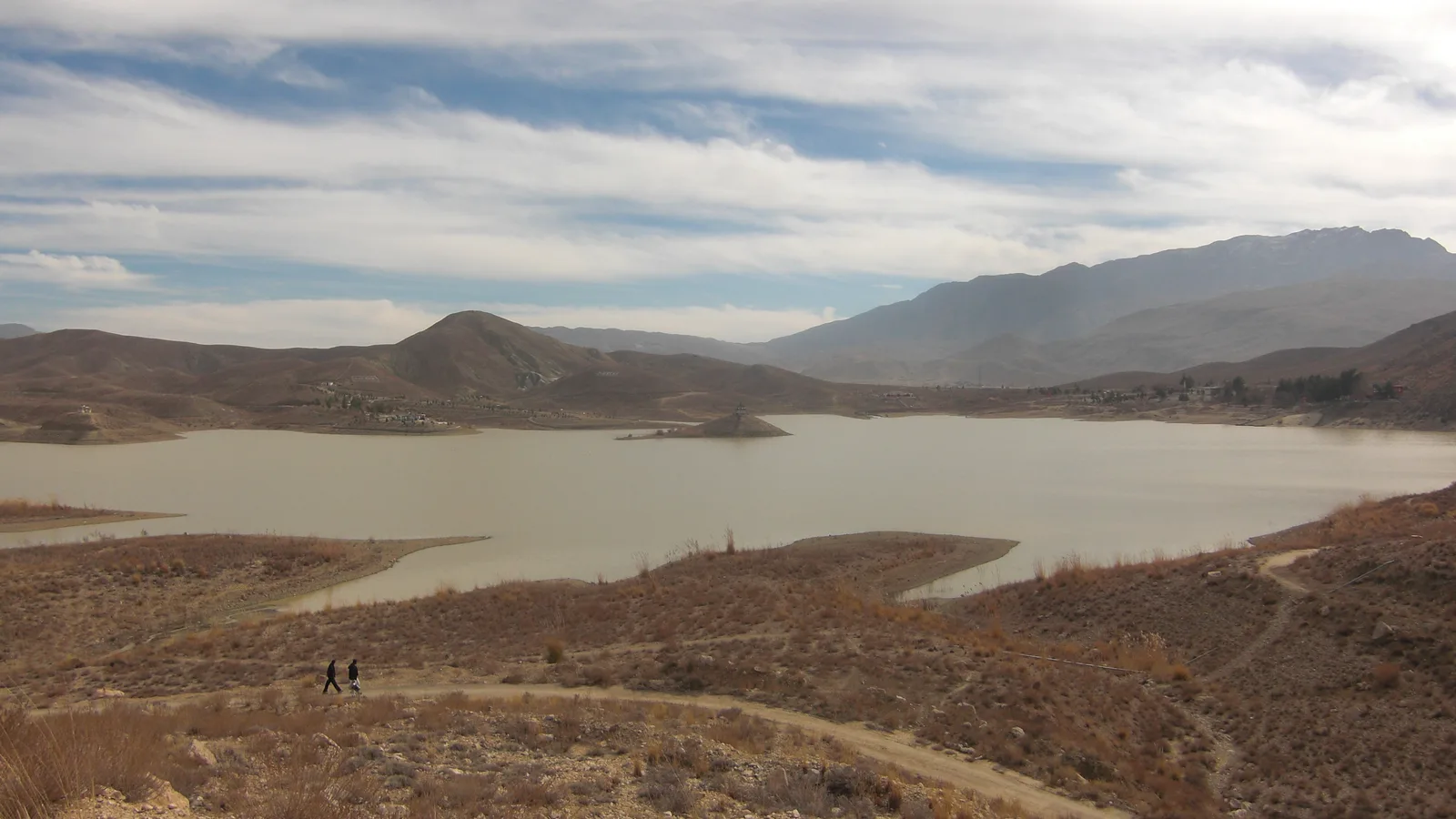
Three assaults account for most of that toll. Gunmen first attacked civilians at Hanna Urak near Quetta over 4-5 July, killing four. The heaviest single blow came on 6 July, when militants mounted a multi-directional assault on the police post at Pumping Station No. 3 near Mangi Dam in Ziarat; 18 policemen died defending the position, and the military says 26 of the attackers were killed. In the third incident, an army convoy was ambushed near Bela-Winder on the N-25 highway, leaving 11 soldiers dead. The military says 14 fighters of the Baloch Liberation Army were killed in the engagement that followed.
It was the Mangi Dam attack that triggered the new offensive. Operation Shaban, the military’s media wing declared, “will continue in Balochistan until the elimination of the last terrorist” — open-ended language that signals a sustained campaign rather than a bounded sweep.
The tempo has not slackened since the launch. By Saturday, 11 July, security forces reported killing 23 more militants, lifting the cumulative count to 102 terrorists neutralised since 5 July. The military says that figure includes seven foreign fighters — a detail meant to underscore its case that the insurgency is externally fed. In a separate intelligence-based operation, two militants linked to what the military calls “Fitna al-Hindustan” — its official designation for militant networks it says are sponsored by India — were also killed.
Then came the reflex. Chaudhry named India — and, for good measure, Afghanistan’s “illegitimate” rulers — as the hands behind the violence. What he did not present, in the briefing reported by Pakistan’s own press, was evidence: no intercepts, no captured operatives produced, no chain of attribution. The charge arrived as it always does — as an assertion, timed to a disaster. New Delhi has heard this script before; when Islamabad last aired it, in February, the Ministry of External Affairs called it “baseless” and “nothing but its usual tactics to deflect attention from its own internal failings.” Five months later, the same charge returned — with the same absence of proof.
The deflection has a purpose, because the honest questions are uncomfortable ones. Thirty-eight security personnel killed in under a week, inside Pakistan’s own largest province, points first to failures that are entirely domestic: intelligence that saw none of three coordinated attacks coming, a police post overrun at platoon scale, an army convoy ambushed on a national highway. Balochistan’s insurgency predates every government in Islamabad’s current memory and feeds on grievances — political exclusion, resource extraction, enforced disappearances — that no Indian hand invented and no Indian denial can resolve. Blaming an external enemy is cheaper than answering for any of that; it is also the one response guaranteed to fix nothing.
There is a cost to crying India by default, and Pakistan pays it too. An accusation deployed after every setback, evidence optional, devalues itself — at home, where Baloch alienation deepens each time its causes are outsourced to a foreign conspiracy, and abroad, where the reflex has become predictable enough that it persuades no one who is not already persuaded. The kill counts announced in response are the military’s own figures, unverifiable in a province closed to outside observers. What is verifiable is the pattern: an open-ended operation in Pakistan’s most restive province, a fresh charge sheet against India built on assertion, and a security establishment that has once again chosen narrative over introspection. Until that changes, Operation Shaban will be remembered less for the militants it kills than for the questions it was launched to avoid.
Sources
- 1. Dawn (Pakistan): 38 security personnel killed in Balochistan attacks, military claims 54 militants dead — dawn.com
- 2. Pakistan Today (Pakistan): military puts Operation Shaban toll at 102 — pakistantoday.com.pk
- 3. The Tribune (India): 'Baseless' — India categorically rejects Pakistan's Balochistan allegations — tribuneindia.com
Senapathi Desk
Staff reports & analysis
The Senapathi Report news desk. Original reporting and analysis synthesised from multiple corroborated sources — defence procurement, service developments and regional security, filed as it happens.