29 Fighters or 36 Civilians: Rival Tolls Deepen the Pakistan-Afghanistan Rift
Pakistan says its 29 June border operations killed at least 29 fighters; the Taliban government counts 36 civilian dead — irreconcilable tallies from the heaviest acknowledged cross-border action in a fortnight.

Senapathi Desk
Staff reports & analysis
Published
2 min read
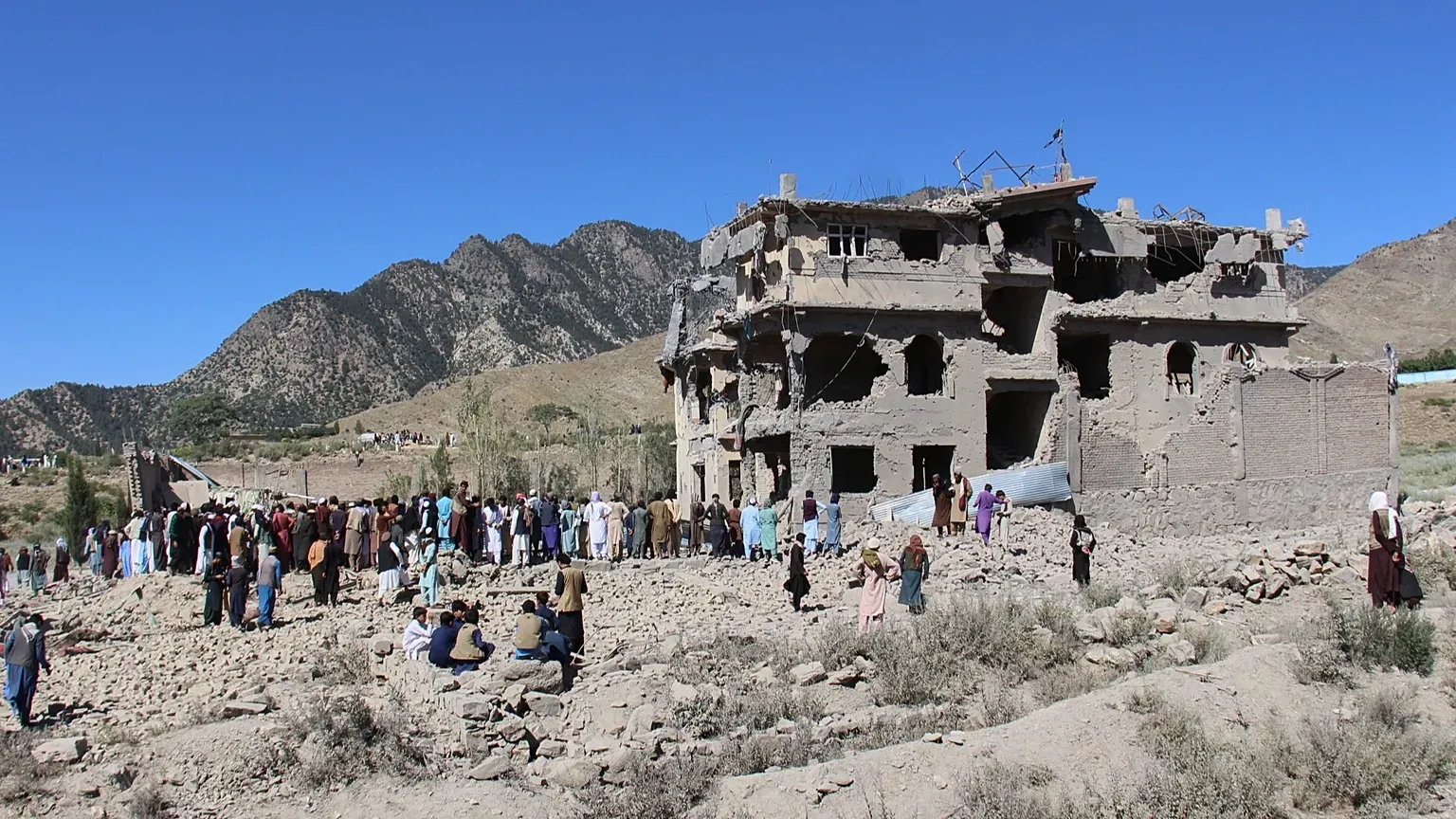
Twenty-nine dead fighters, or 36 dead civilians. Those are the two irreconcilable ledgers to emerge from the same set of Pakistani strikes along the Afghanistan border — and the seven-body gap between them is the least of the discrepancies. Pakistan announced on 29 June that its security forces had killed at least 29 fighters in combined ground and air operations along the frontier. The Afghan Taliban government’s deputy spokesman, Hamdullah Fitrat, offered a different count entirely: 36 dead, all of them, in his telling, civilians.
Read the figures side by side and the dispute is not really about arithmetic. Zero — the number of casualties both governments describe the same way — is the statistic that matters. Every death Pakistan claims as a militant, the Taliban government claims as a non-combatant. There is no shared baseline, no partial overlap, no concession at the margins from either side.
Two Counts, One Escalation
The scale is what distinguishes this round. At least 29 claimed kills makes 29 June the heaviest acknowledged Pakistani cross-border operation of the fortnight, a stretch that has already seen repeated actions along the frontier. The use of both ground forces and air power in a single operation signals something beyond harassment fires: this was a deliberate, resourced action, publicly owned rather than left deniable.
The Taliban government’s 36-civilian figure is doing equal and opposite work. By denying that any of the dead were fighters, it rejects the entire premise of the operation — that Afghan territory hosts armed men who move against Pakistan. Fitrat’s count is not merely a casualty statement; it is a political and legal counter-charge.
Days after the strikes, army chief Field Marshal Asim Munir restated, at an appearance in Rawalpindi, the claim that Afghan soil is being used against Pakistan. The repetition matters. It ties the 29 June operation to a standing doctrine rather than a one-off retaliation, and it signals that Pakistan’s military leadership expects to act across the border again.
The Western Ledger
For observers in India, the most consequential number may be one nobody has published: the count of Pakistani formations now committed to the western front. Sustained ground-and-air operations along the Afghanistan border consume troops, aircraft hours, and command attention — capacity that is, by definition, unavailable for Pakistan’s eastern frontier. Confrontation with the Taliban government is no longer an episodic irritant to be managed with border posts alone; it is a live theatre with its own force requirements.
Neither tally can currently be independently verified, and that is precisely why both sides invest so heavily in them. In a confrontation where each government accuses the other of lying about who died, the casualty figures are themselves weapons. What can be verified is the trajectory: strike, counter-count, doctrinal restatement — a cycle that has completed a full turn inside a single fortnight and shows no arithmetic of de-escalation on either side of the line.
Sources
- 1. Pakistan launches ground operation along Afghan border, killing dozens — upi.com
- 2. Rival casualty counts follow Pakistani cross-border strikes — taipeitimes.com
- 3. Taliban government says Pakistani strikes killed 36 civilians — tolonews.com
Senapathi Desk
Staff reports & analysis
The Senapathi Report news desk. Original reporting and analysis synthesised from multiple corroborated sources — defence procurement, service developments and regional security, filed as it happens.