DRDO's MP-ATGM Poised for Army Induction After a Decade in Development
At 14.5 kg with a 2.5 km reach, the indigenous fire-and-forget MP-ATGM is set for Indian Army induction after ten-plus years of development, closing an infantry anti-tank gap and trimming reliance on imported missiles.

Senapathi Desk
Staff reports & analysis
Published
2 min read
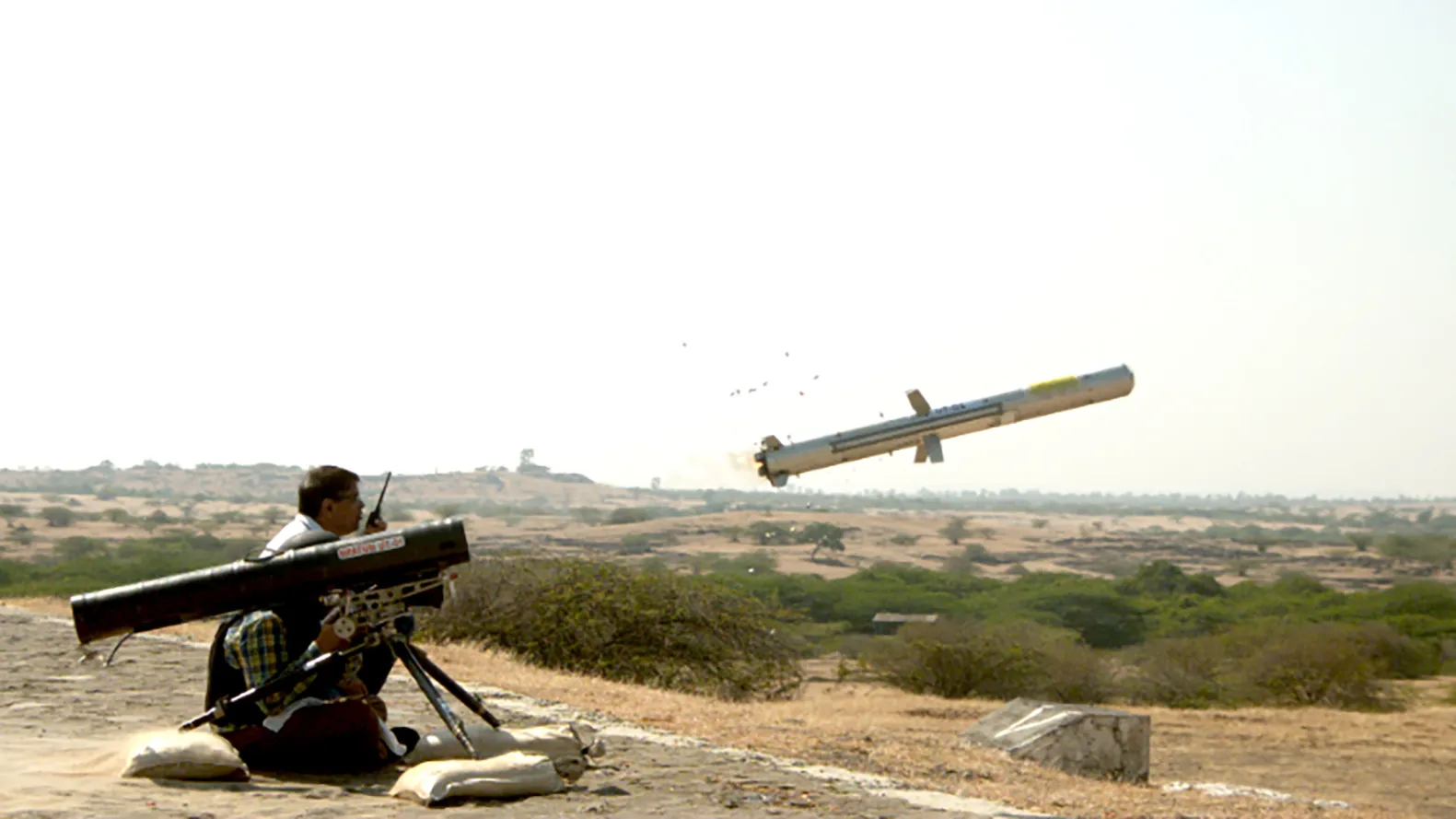
Strip the MP-ATGM down to its numbers and the story almost tells itself: a 14.5-kilogram missile, a 14.25-kilogram launch unit, a reach of roughly 2.5 kilometres — and more than ten years between the day the Defence Research and Development Organisation was handed the requirement and the moment, reported on 4 July, when the weapon stands poised for induction into the Indian Army.
Each of those figures answers a question India’s infantry has been asking for years. A complete system under 29 kilograms, split between two loads, means a foot patrol can carry, emplace and fire the missile with no vehicle in sight — the definition of man-portable that gives the weapon its name. The engagement envelope, from a minimum of about 200 metres out to roughly 2.5 kilometres, brackets the distances at which dismounted troops actually meet enemy armour. And the missile itself is compact by third-generation standards: about 1.3 metres long and 12 centimetres in diameter.
The capability packed into that airframe is where the decade of work shows. The MP-ATGM is fire-and-forget: an imaging infrared seeker locks onto the target before launch, freeing the firing team to displace the instant the missile leaves the tube. A top-attack mode sends it diving onto a tank’s turret roof, where armour is thinnest, while a tandem warhead is designed to defeat the explosive reactive armour layered onto modern tanks. A direct-attack mode covers bunkers and targets that a plunging profile would miss.
Ten Years, Measured in Trials
The programme’s other defining number is time. Development was sanctioned more than a decade ago, drawing on the seeker and guidance lineage of the vehicle-mounted Nag missile, and the years since have been consumed by iterative flight testing. The Indian Army completed a third round of user trials in 2024, and the run of successful tests since has carried the system to the edge of formal induction — the status confirmed in the 4 July reporting.
What Induction Changes
The strategic arithmetic is the final layer. India’s infantry anti-tank inventory has long leaned on imported and licence-built missiles, leaving a shoulder-fired, third-generation gap that foreign purchases only partially and expensively filled. An indigenous round changes that maths: production would sit with Bharat Dynamics Limited, which is expected to scale output once firm orders arrive, keeping both the supply chain and the upgrade path inside the country.
Two numbers, though, are still missing from the ledger. Neither the size of the initial order nor the delivery timeline has been made public, and “poised for induction” is not the same as missiles in battalion armouries. After ten years of development, the MP-ATGM’s hardest figures — quantity and date — are the ones the Army has yet to write.
Sources
- 1. DRDO's indigenous tank-killer MP-ATGM poised for induction after 10-year development — timesofindia.indiatimes.com
- 2. MP-ATGM explained: India's indigenous missile set to strengthen the Army — defence.newsd.in
Senapathi Desk
Staff reports & analysis
The Senapathi Report news desk. Original reporting and analysis synthesised from multiple corroborated sources — defence procurement, service developments and regional security, filed as it happens.