Iran Mourns Khamenei as Injured Successor Mojtaba Stays Out of View
The weeklong state funeral for the supreme leader killed in the war's opening strike leaves Iran's transition — and a fragile US-Iran peace process — resting on a successor the public has not seen.

Senapathi Desk
Staff reports & analysis
Published
3 min read
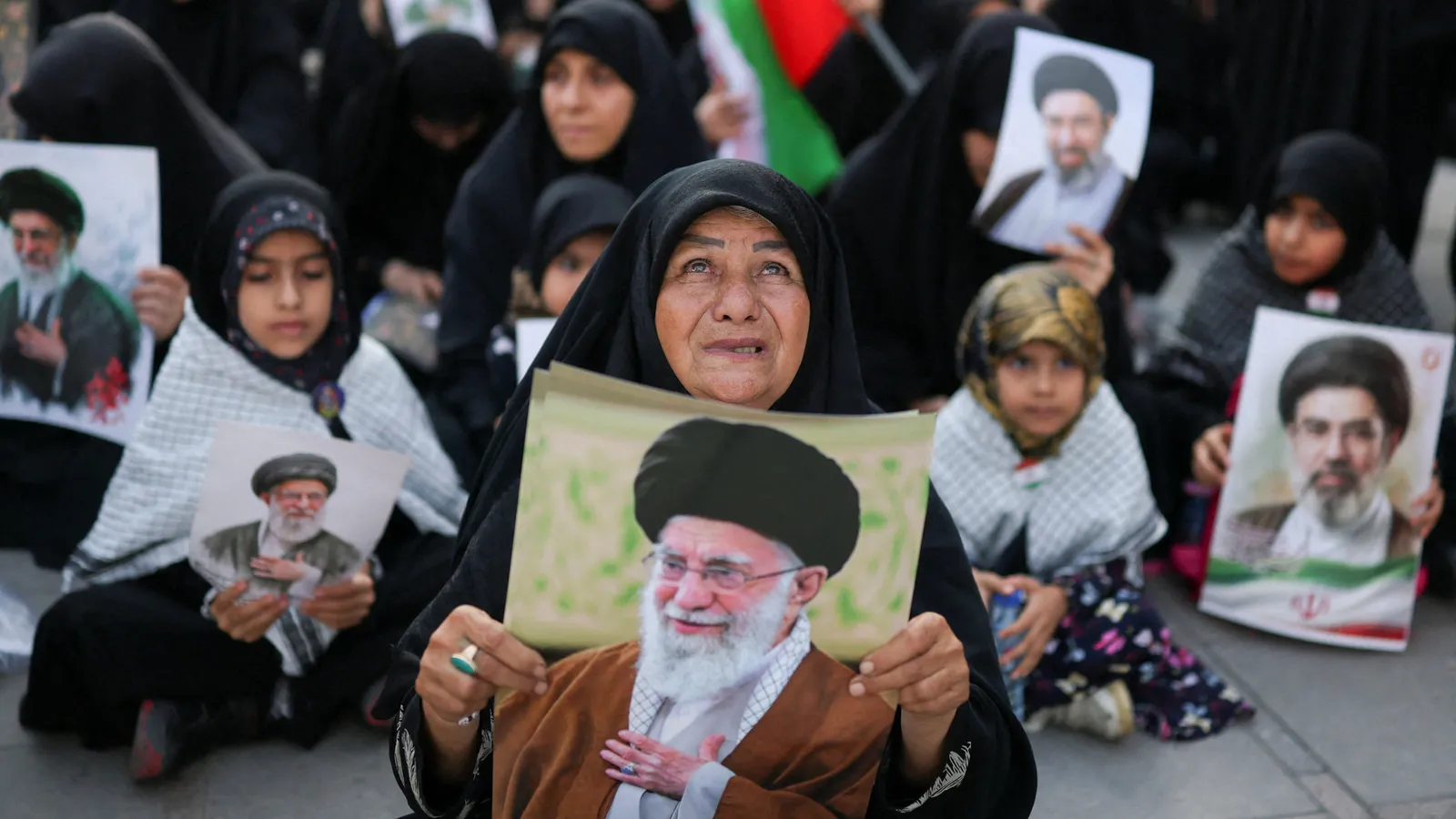
The picture Iran’s government wanted the world to see on Saturday was one of multitudes: hundreds of thousands of mourners pressed into Tehran’s avenues beneath black banners, opening a funeral for Ayatollah Ali Khamenei choreographed to run a full week, across five cities and two countries. The picture it could not provide was the one that matters more. Mojtaba Khamenei — the son who has succeeded his father as supreme leader — was nowhere in the frame, and according to three people with knowledge of the matter, he will not appear at any point in the ceremonies. He was severely injured in the same strike that killed his father, and Iran’s most consequential political transition in a generation is now being conducted around a man the public cannot see.
The rites that began on 4 July are scheduled by Iranian authorities to run through 9 July, when the late leader is to be buried. Stretching the mourning across multiple cities, and beyond Iran’s borders, gives the state machinery days of processions and gatherings through which to demonstrate continuity — and to summon the crowds that have always served as the Islamic Republic’s preferred answer to questions about its legitimacy.
The man being buried ruled Iran for 37 years, and the manner of his death shadows every hour of the mourning. Khamenei was killed in February by the first airstrike of the war launched by the United States and Israel — the opening blow of what the United States called Operation Epic Fury. That the funeral comes more than four months after his death is itself a measure of how thoroughly the war upended the state he led: Iran is burying its supreme leader long after losing him.
The Successor No One Sees
In Iran’s system, the supreme leader’s authority is not merely held; it is displayed — in sermons, audiences and carefully staged appearances. A new leader who cannot stand at his own father’s graveside begins his rule with that essential theatre missing. The severity of Mojtaba Khamenei’s injuries has not been publicly detailed, which leaves the central question of the transition open: whether the absence is a matter of weeks of recovery or a durable vacuum at the apex of the state. Either way, the longer he remains unseen, the louder the question of who is actually exercising his office — and the greater the incentive for rival power centres within the security establishment and clergy to answer it themselves.
A Peace Process Waiting at the Door
The uncertainty carries directly into diplomacy. Negotiations between the United States and Iran are reportedly set to resume on 11 July, two days after the planned burial — a timetable that places the peace process immediately behind the mourning. That sequencing sharpens the stakes of the funeral week. The United States will be negotiating with a state whose ultimate decision-maker was wounded by its own opening strike and has yet to appear in public; Iranian negotiators, for their part, must bind a leadership whose internal balance is still unsettled. Any agreement requires a counterparty who can enforce it at home, and it is not yet demonstrable that Iran has one.
The next week, then, is more than a farewell. Between the burial on 9 July and the talks set for 11 July lies a narrow passage in which Iran must show — to its own people first, and then to the governments across the table — that the succession is real and not merely announced. What the Islamic Republic reveals in that window, and what it continues to keep out of view, will say more about its future than the size of the crowds that opened the mourning.
Sources
- 1. Iranians flock to weeklong funeral rites for Khamenei — reuters.com
- 2. Iran begins dayslong funeral for supreme leader killed in war — pbs.org
- 3. Injured successor Mojtaba Khamenei to miss his father's funeral — nbcnews.com
- 4. Ceremonies across five cities mark Khamenei's death and succession — nytimes.com
Senapathi Desk
Staff reports & analysis
The Senapathi Report news desk. Original reporting and analysis synthesised from multiple corroborated sources — defence procurement, service developments and regional security, filed as it happens.