General Dhiraj Seth Takes Over as 31st Army Chief With 'VIJAY' Transformation Vision
A change of command atop the 1.3-million-strong Indian Army hands General Dhiraj Seth the task of turning his 'VIJAY' vision of a technology-driven, future-ready force into decisions, budgets and timelines.

Senapathi Desk
Staff reports & analysis
Published
2 min read
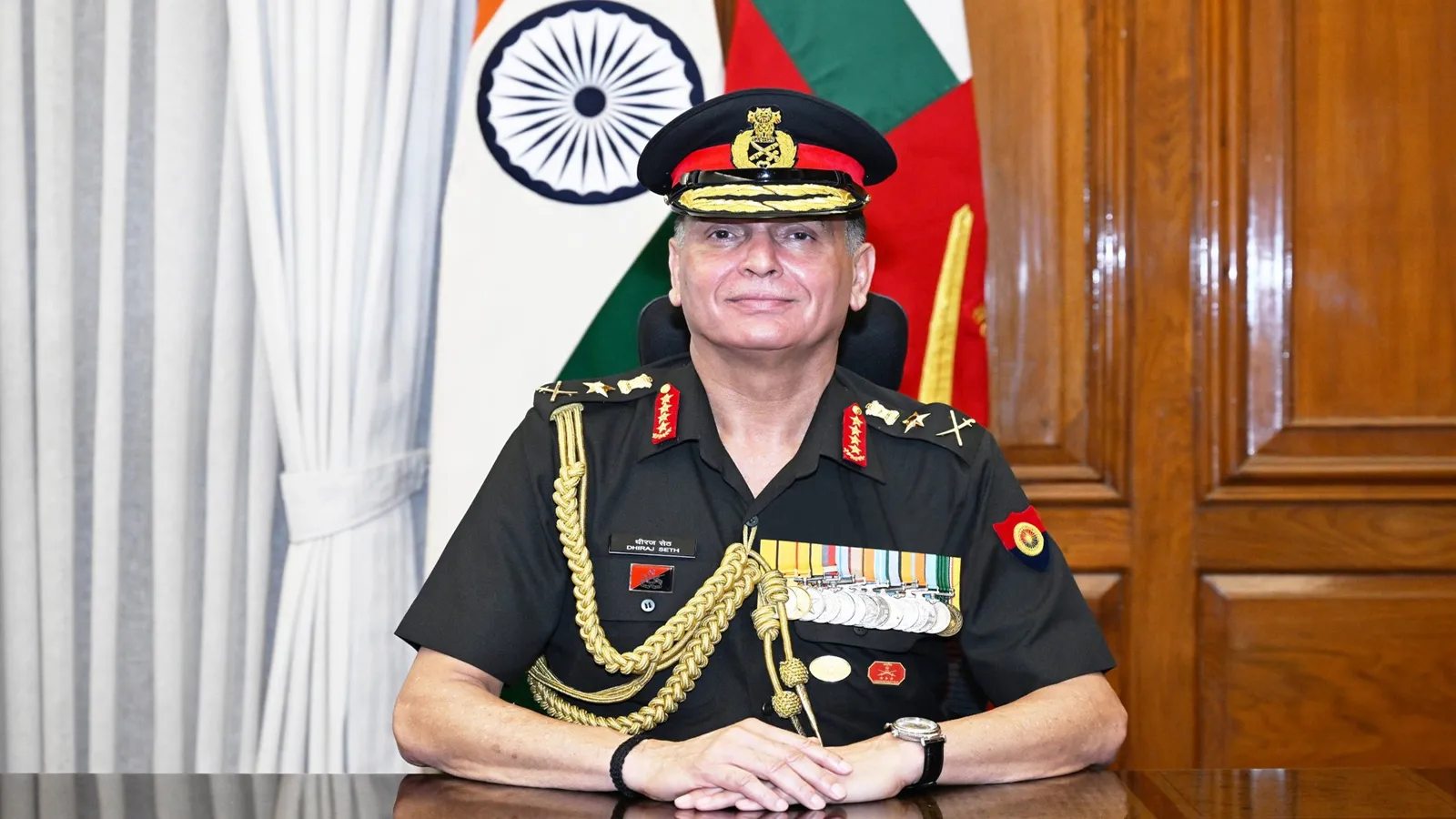
The most consequential decisions General Dhiraj Seth will make as India’s new Army chief have not been made yet — and that is precisely the point of the vision he arrived with. Taking charge as the 31st Chief of the Army Staff on 30 June, the former Vice Chief inherited a 1.3 million-strong force and immediately set its direction: a transformation agenda he calls “VIJAY”, aimed at building a modern, technology-driven, future-ready Army.
General Seth succeeds General Upendra Dwivedi, who superannuated after handing over a force already in the middle of significant restructuring. That continuity matters for what comes next. As Vice Chief of the Army Staff, Seth sat at the centre of the Army’s modernisation machinery; he now owns every trade-off he previously helped frame. The question that will define his tenure is not whether the Army should transform — that argument has largely been settled by the conflicts every serious military is studying — but how fast, in what order, and at whose expense within a finite budget.
His background offers a clue to how he may answer. Seth is an armoured corps officer, a “tankman” by formation, with a reputation for analysing how warfare is changing globally rather than defending the platforms he grew up with. That combination — deep investment in a legacy arm, paired with a focus on where conflict is heading — suggests a chief who understands better than most what it costs an institution to let go of the familiar.
The tests that will tell
Vision statements are announced in a day; armies change over years. The early tells of whether VIJAY is a genuine operating plan or a ceremonial slogan will show up in unglamorous places: which acquisition cases the new chief pushes hardest, which formations receive the first tranches of new technology, and whether training and doctrine begin to reflect the technology-first force he has described. Each of those is a decision with a date attached, and each will reach his desk quickly.
The structural clock is unforgiving. Procurement cycles in India routinely run longer than any single chief’s tenure, which means Seth’s real leverage lies in what he sets in motion rather than what he completes. The programmes he prioritises in his first year will shape the Army his successors command a decade from now; anything he defers may effectively stay deferred for years.
There is also the force itself. A 1.3 million-strong Army is an enormous institution to reorient, and transformation agendas have a way of thinning out as they travel from Army Headquarters to the field. Turning VIJAY from a headline into changed behaviour at the unit level — new skills, new equipment in soldiers’ hands, new assumptions about the next fight — is the harder, slower half of the job.
For now, the new chief holds the two assets every reformer needs at the start: a clearly stated direction and the institutional knowledge of a former Vice Chief. The coming months will show what he converts them into. The announcement was the easy part; the Army he eventually hands over will be the verdict.
Sources
- 1. PIB release on General Dhiraj Seth assuming charge as Chief of the Army Staff — pib.gov.in
- 2. Report on General Seth taking charge as the new Army chief — thehindu.com
- 3. Coverage of the new Army chief's 'VIJAY' vision — ndtv.com
- 4. Analysis of the modernisation challenge awaiting the new chief — theprint.in
Senapathi Desk
Staff reports & analysis
The Senapathi Report news desk. Original reporting and analysis synthesised from multiple corroborated sources — defence procurement, service developments and regional security, filed as it happens.