BrahMos Export Pipeline Widens: Indonesia Seeks Second Battery, UAE Talks Advance
A repeat Indonesian request and advancing UAE negotiations would carry India's flagship missile export from Southeast Asia into the Gulf — a test of whether Indian weapons can win in fiercely competitive markets.

Senapathi Desk
Staff reports & analysis
Published
3 min read
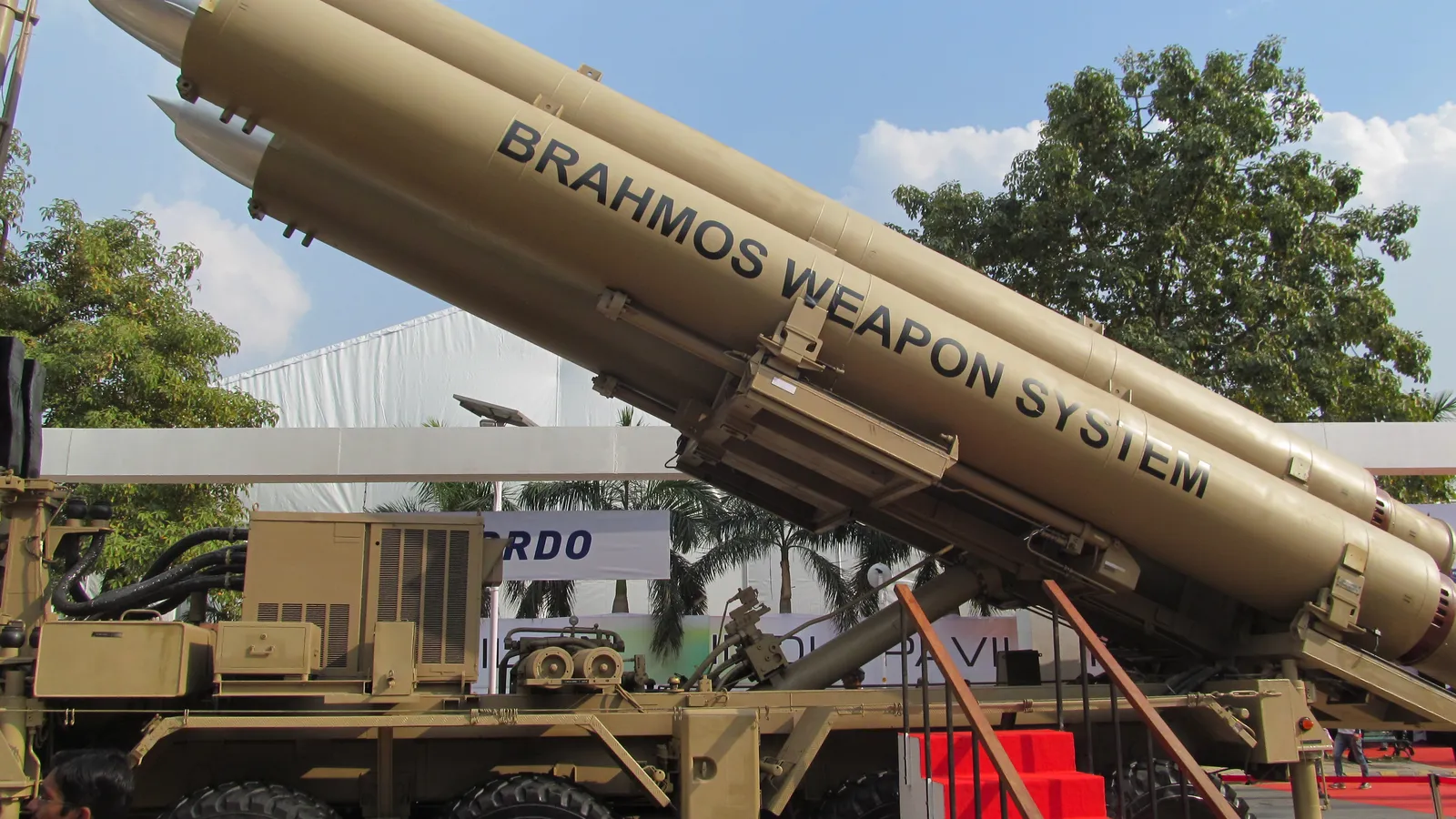
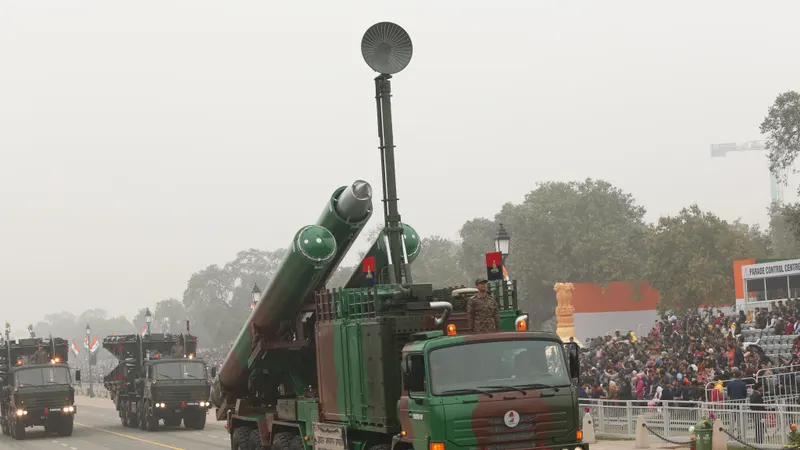
When a customer comes back for more within months of signing, that is not a purchase — it is a verdict. Indonesia, which contracted its first battery of BrahMos supersonic cruise missiles in March, has now approached India seeking a second, according to reports on 4 July. In the same week, negotiations over a potential BrahMos sale to the United Arab Emirates were reported to be moving forward. Taken together, the two developments mark the moment India’s flagship missile export stops looking like an experiment and starts looking like a pipeline — one that runs from Southeast Asia into the Gulf.
Start with Indonesia, because repeat orders are the rarest currency in the arms trade. The March agreement covered one battery. Four months on, Indonesia has asked for another, and has sought favourable credit terms to pay for it. That second request is nearly as revealing as the first: financing, not capability, is usually the sticking point when developing economies buy high-end weapons, and how flexibly India responds will show how much it wants export volume rather than just export headlines.
The timing is deliberate. The Indonesian request arrives ahead of Prime Minister Narendra Modi’s visit to the country, and India is reported to be interested in Indonesian critical minerals in return. The missile deal, in other words, sits inside a wider exchange — defence hardware and credit on one side, access to strategic resources on the other. If the visit produces an announcement, it would give India a template to offer other buyers: weapons as one strand of a broader economic bargain rather than a standalone transaction.
The Gulf Track
The United Arab Emirates conversation is at an earlier stage but arguably carries higher stakes. Reports in late June described active talks over a potential BrahMos sale as part of a new phase in the India-UAE defence partnership, one that also covers export of the Akashteer system. No contract has been announced, and negotiations of this kind can run long. But the direction matters more than the pace.
The Gulf is among the most crowded and demanding arms markets anywhere, a region where the world’s biggest suppliers compete hardest for a small pool of wealthy buyers. Analysts have argued that an Emirati order would amount to a public endorsement of Indian weapons in exactly that environment — proof that they can win business against entrenched competition. For a country trying to convert decades as an arms importer into a credible export industry, that endorsement could be worth more than the contract itself.
Can India Deliver?
Demand is broadening on its own. Fresh enquiries about BrahMos have reportedly come from six countries, extending well beyond the missile’s original Southeast Asian customer base. The deals already struck with Vietnam and Indonesia have been read as evidence of a significant shift in the character of India’s arms exports — away from marginal sales and towards complete, high-end strike systems.
The supply side is moving to meet that demand. The joint venture that produces the missile has brought a new facility in Lucknow online, raising total production capacity by 20 per cent. That expansion is the quiet precondition for everything else: an exporter that cannot deliver on schedule does not remain an exporter for long, and a widening order book — Indonesia now, potentially the Gulf next — will test the production line as much as it tests the diplomats.
What to watch next is concrete. First, whether India agrees to the credit terms Indonesia has requested, and whether the Modi visit converts the enquiry into a signed order. Second, whether the UAE talks move from discussion towards specifics. Neither outcome is guaranteed, and exports of this kind have collapsed at later stages before. But the pattern is already visible: the question hanging over BrahMos is no longer whether anyone beyond the first customers will buy it. It is how many will, how fast, and on what terms.
Sources
- 1. BrahMos seen enhancing UAE stand-off strike capability — forbes.com
- 2. Decoding the strategic significance of a BrahMos deal for the Gulf — theweek.in
- 3. Analysts call a UAE order a confidence boost for Indian arms — scmp.com
- 4. Fresh BrahMos interest reported from six countries — timesofindia.indiatimes.com
- 5. Indonesia seeks additional BrahMos battery ahead of Modi visit — theprint.in
- 6. Indonesia requests favourable credit terms for extra battery — msn.com
Senapathi Desk
Staff reports & analysis
The Senapathi Report news desk. Original reporting and analysis synthesised from multiple corroborated sources — defence procurement, service developments and regional security, filed as it happens.