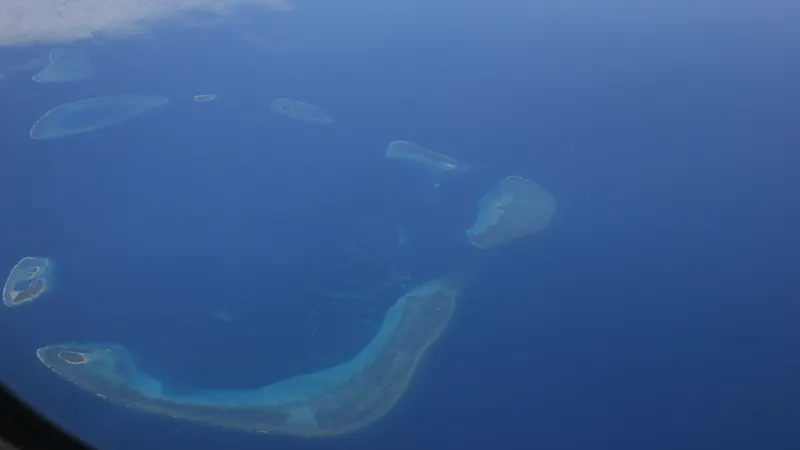
Philippine Air Force to Fortify Front-Line Bases at Thitu and Santa Ana
The Philippines answers intensified Chinese coast guard and naval pressure with an air-presence build-up at Thitu Island in the Spratlys and Santa Ana near the Luzon Strait, backed by new patrol aircraft, helicopters and radar.

Senapathi Desk
Staff reports & analysis
Published
2 min read
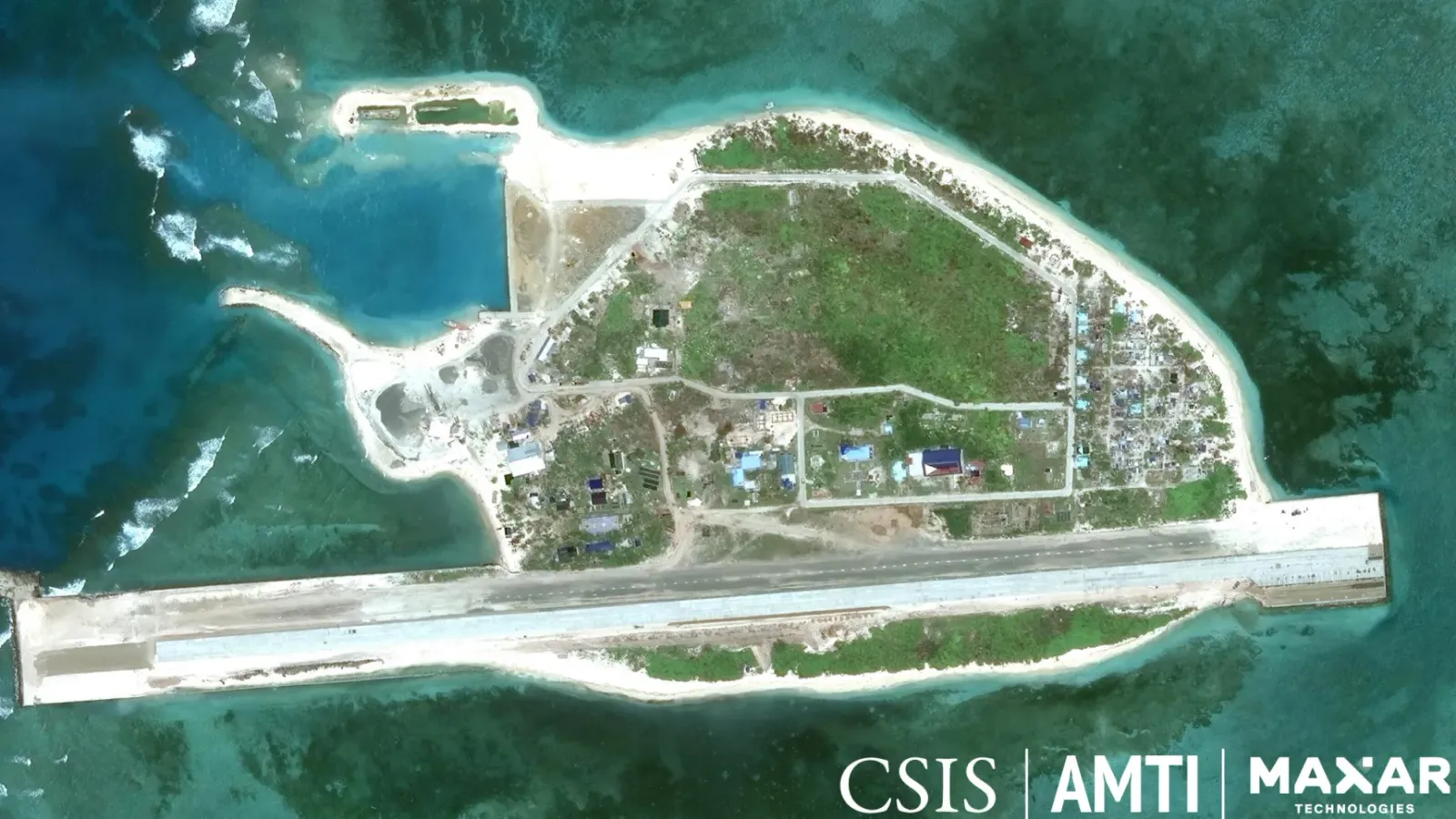
The Philippine Air Force will fortify two of the country’s most exposed front-line bases — Thitu Island in the contested Spratly archipelago and Santa Ana in Cagayan province near the Luzon Strait — its commanding general announced on 1 July, a direct answer to intensified Chinese coast guard and naval pressure in the surrounding waters.
Lieutenant General Arthur Cordura set out the plans on Wednesday at ceremonies marking the service’s 79th anniversary. The air force, he said, is focused on “mission readiness, interoperability with allies, and building a credible multi-domain force.”
The announcement pairs construction at the two outposts with a procurement push — better facilities forward, better coverage overhead. The acquisition slate reads as a maritime-surveillance package: long-range patrol aircraft to extend the service’s reach over disputed waters, additional Black Hawk medium-lift helicopters, Bell 412EPX helicopters for search and rescue, and advanced surveillance radar dedicated to maritime monitoring.
The details signal consolidation as much as expansion. The Black Hawk order deepens a type the service already operates rather than introducing a new one. The Bell 412EPX purchase addresses search and rescue across an enormous archipelagic operating area. The radar buy targets the persistent-watch problem: knowing, at all times, what is moving through Philippine-claimed waters.
Thitu, which the Philippines calls Pag-asa, lies deep in the Spratlys, where Chinese coast guard and naval vessels have kept up sustained pressure on Philippine-held positions. Hardening air facilities there gives the armed forces a forward operating node inside the contested zone itself, shortening the distance for patrol, resupply and rescue missions.
Santa Ana covers the opposite flank. The Cagayan base sits near the Luzon Strait, the waterway between the northern Philippines and Taiwan, and it carries an alliance dimension: the site is designated under the Enhanced Defense Cooperation Agreement, which grants United States forces rotational access to selected Philippine facilities. Money spent there upgrades infrastructure both militaries can use.
The pairing is the story. One base faces the South China Sea, where friction between Chinese and Philippine vessels has intensified; the other watches the maritime approaches to Taiwan. An air force with radar coverage, fixed-wing patrol reach and rotary-wing lift at both locations holds persistent presence across the country’s two hardest security problems at once.
Cordura’s emphasis on interoperability points the same way. Improvements at Santa Ana stand to serve rotational American deployments as well as Philippine squadrons, tightening the operational weave between the treaty allies. Thitu carries no such designation; the build-up there is a national undertaking on ground the Philippines already holds against competing claims.
The message from the anniversary podium was one of direction rather than detail: more sensors, more lift, more reach — concentrated at the two points on the map where the pressure on the Philippines is greatest.
Sources
- 1. US Ally to Fortify Front-Line Bases Against China — newsweek.com
Senapathi Desk
Staff reports & analysis
The Senapathi Report news desk. Original reporting and analysis synthesised from multiple corroborated sources — defence procurement, service developments and regional security, filed as it happens.