Navy's Next Wave: A ₹1 Lakh Crore Warship Pipeline Takes Shape
Reported Project 15C, 17B and 18A plans — sixteen hulls including 14,000-15,000-tonne combatants that would be the largest warships ever built in India — would anchor a decade of order books for Mazagon Dock, Garden Reach and other yards.

Senapathi Desk
Staff reports & analysis
Published
3 min read
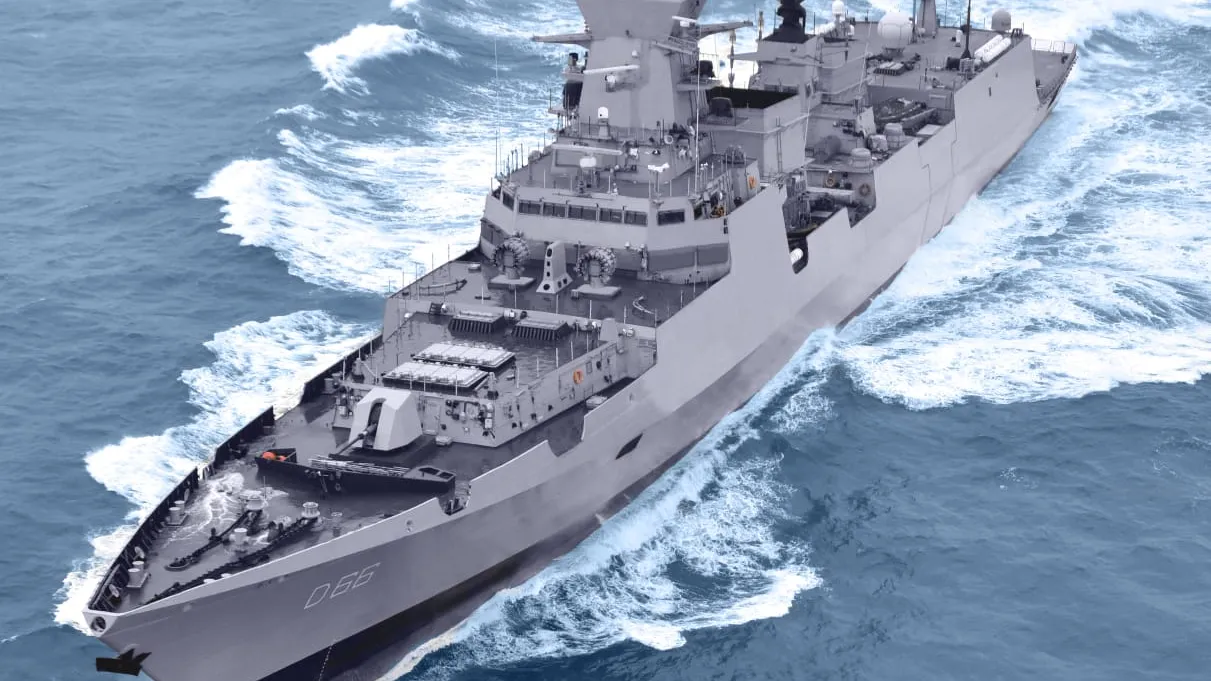
The largest combat vessels ever to be attempted in an Indian shipyard do not yet have names, keels or even a tender document. What they have, as of this week, is a place in a plan. According to reporting on 10 July, the Indian Navy is preparing three indigenous warship programmes worth around ₹1 lakh crore in total — a pipeline of destroyers, stealth frigates and a class of giants that would stretch from the next tender cycle deep into the 2030s. For the country’s warship builders, the plan reads less like a shopping list than a schedule for the next decade of their working lives.
The reported package rests on three project lines, and the designations mark them as the next iterations of the fleet the Navy already operates. Project 15C covers four next-generation guided-missile destroyers at an estimated cost of around ₹50,000 crore. It is also the programme on the shortest clock: the request for proposals is expected within the next year, with construction beginning about three years after the RFP goes out. If that sequencing holds, the first of the new destroyers could be taking shape on a slipway around the turn of the decade.
Project 17B is the frigate line — six advanced stealth ships costing roughly ₹40,000 crore, with the RFP expected in about 18 months. It is the only one of the three programmes whose industrial geography is already reported: Mazagon Dock Shipbuilders Limited and Garden Reach Shipbuilders & Engineers would build three hulls each, an even split between the yards on India’s western and eastern seaboards. For both builders, that allocation alone represents years of assured work stacked behind the orders they already hold.
Then there is Project 18A, the entry that turns a procurement story into something more ambitious. Six next-generation Large Surface Combatants, each displacing 14,000 to 15,000 tonnes, would rank among the largest combat vessels ever constructed in India. Nothing in the current fleet — and nothing any Indian yard has yet laid down — matches that scale. The programme is also on the longest fuse: the RFP is expected over the next three years, and construction is likely to begin around eight years after that. On the reported timeline, first steel on the biggest ships may not be cut until well into the 2030s.
That staggering is the most revealing feature of the plan. The three RFPs arrive roughly a year, eighteen months and three years out, and the build phases cascade behind them. Rather than a single burst of orders, the Navy is describing a conveyor: destroyers entering construction as the frigate tender concludes, frigates in build as the large combatants move from concept to contract. For shipyards whose great vulnerability has always been the feast-and-famine rhythm of episodic orders, a decade-long conveyor is worth almost as much as the money itself.
The caveats deserve equal billing. All of this is reported planning, not signed contracts. An RFP expected “within a year” is a statement of intent that must still survive costing, competition and cabinet-level approval, and the figures attached to each project are early estimates for programmes that have not yet reached the tender stage. Only Project 17B comes with named builders; where the destroyers and the large combatants will be built remains unassigned, a question that will matter enormously to yards hungry for the work. And the longest timeline invites the hardest question: a warship whose construction begins eight years after a tender that is itself three years away must be designed today for a threat environment nobody can fully describe.
Still, the direction of travel is unambiguous. A navy that once bought its capital ships abroad is now sketching its largest-ever combatants for domestic slipways, and pricing the ambition at ₹1 lakh crore. The ships are years from the water. The industrial decade they would underwrite starts the moment the first tender lands.
Sources
- 1. Destroyers, stealth frigates, giant warships: Indian Navy plans its biggest fleet expansion in years — theweek.in
- 2. Indian Navy plans ₹1 lakh crore mega warship push with Project 15C, 17B and 18A — idrw.org
- 3. Indian Navy set to launch ₹1 lakh crore indigenous warship programmes — ssbcrackexams.com
Senapathi Desk
Staff reports & analysis
The Senapathi Report news desk. Original reporting and analysis synthesised from multiple corroborated sources — defence procurement, service developments and regional security, filed as it happens.