Ankara Summit: €70bn for Ukraine, a Patriot Licence and NATO's $40bn Drone Push
NATO's first summit in Ankara locked in €70 billion for Ukraine in 2026 with matching commitments for 2027, saw Trump offer Ukraine a licence to build Patriot interceptors, and launched a $40 billion, five-year drone and counter-drone push.

Senapathi Desk
Staff reports & analysis
Published
4 min read
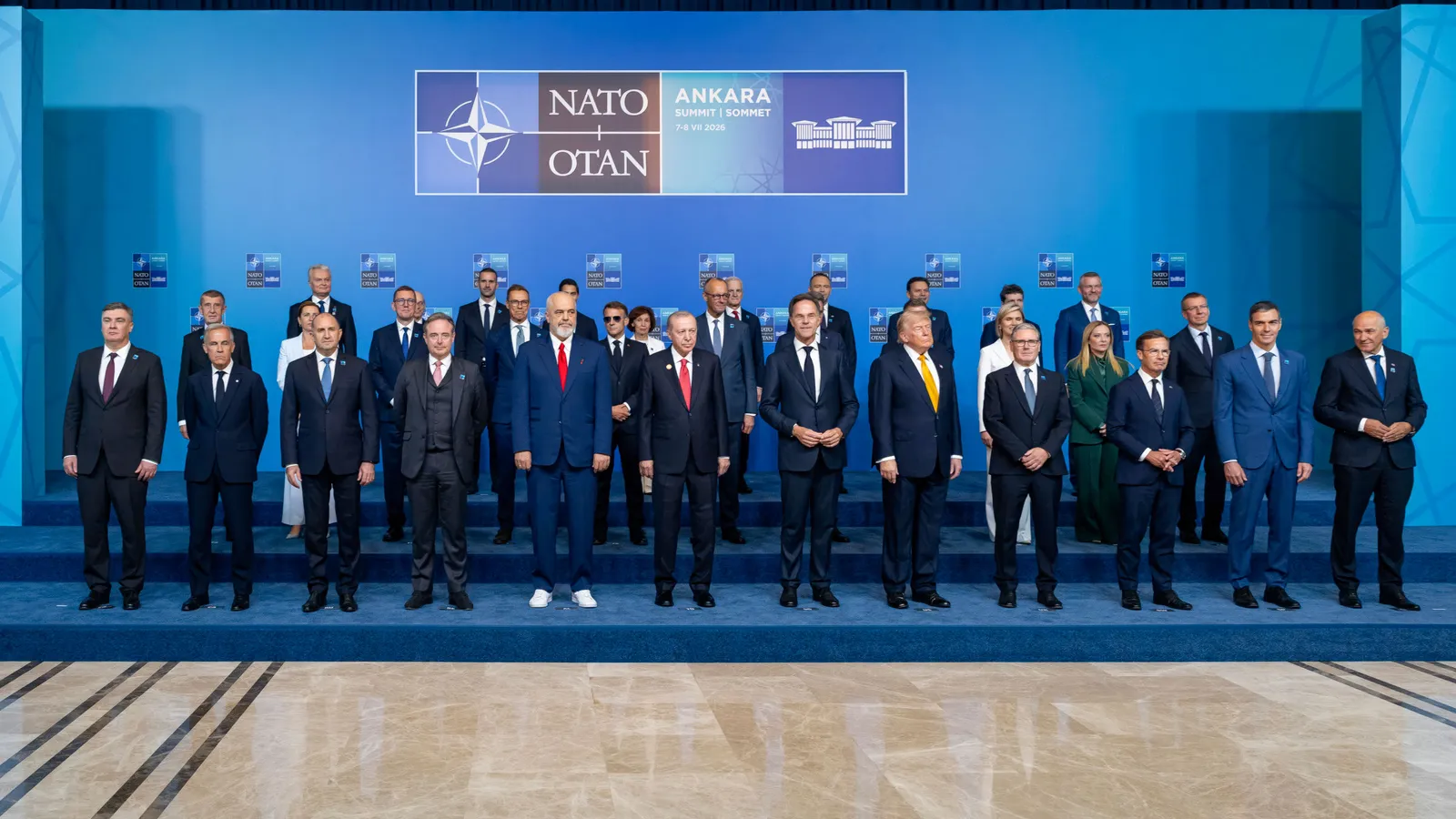
NATO summits are usually remembered for their photographs, not their line items. The alliance’s first summit hosted in Ankara, which closed on 8 July with all 32 member states’ leaders in attendance, may be the exception. It produced three commitments with hard edges: 70 billion euros in military support for Ukraine this year with a matching floor for next, an American licence for Ukraine to build Patriot interceptors, and the largest collective drone investment in the alliance’s history.
Start with the money, because its structure matters more than its size. The Ankara Summit Declaration pledges 70 billion euros in military equipment, assistance and training for Ukraine in 2026 — and, in the line that will matter most in twelve months, affirms sovereign commitments to sustain at least equivalent levels in 2027. The declaration also welcomed the European Union’s decision to fund Ukraine on a multi-year basis through the Ukraine Support Loan. Ukraine’s problem for two years has been less the absence of money than the absence of predictable money: aid arriving in politically contingent tranches forces a defence ministry to ration rather than plan. A floor that extends into 2027 lets Ukrainian planners sign contracts against next year’s budget instead of lobbying for it. That is the least quotable outcome of the summit and probably its most consequential.
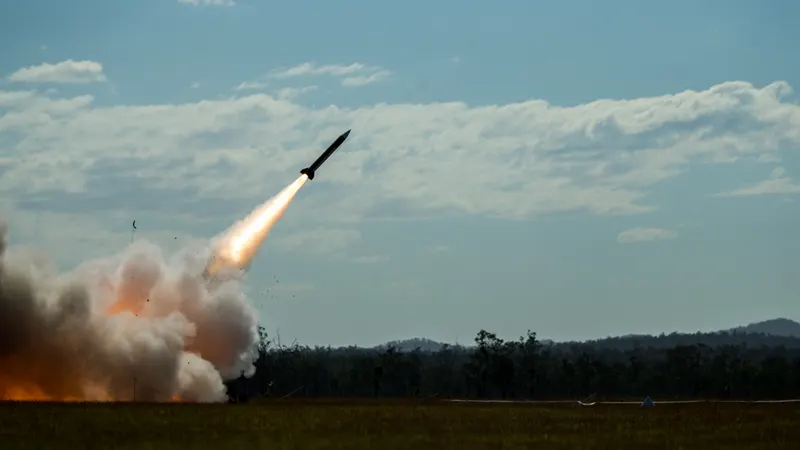
The most quotable belongs, inevitably, to the American president. “We’re going to give a license to you to make Patriots,” Donald Trump told Volodymyr Zelensky in Ankara, adding that the Patriot is “a defensive weapon, which I like better than an offensive weapon.” Strip away the phrasing and the substance is real. Ukraine’s acute shortage is in PAC-3 interceptors, the only weapon in its arsenal capable of shooting down ballistic missiles — the category of Russian attack that layered defences find hardest to stop. Every donated interceptor to date has come out of a finite American production run with a long queue of other claimants. A licence changes Ukraine’s position from customer of a scarce commodity to participant in its production.
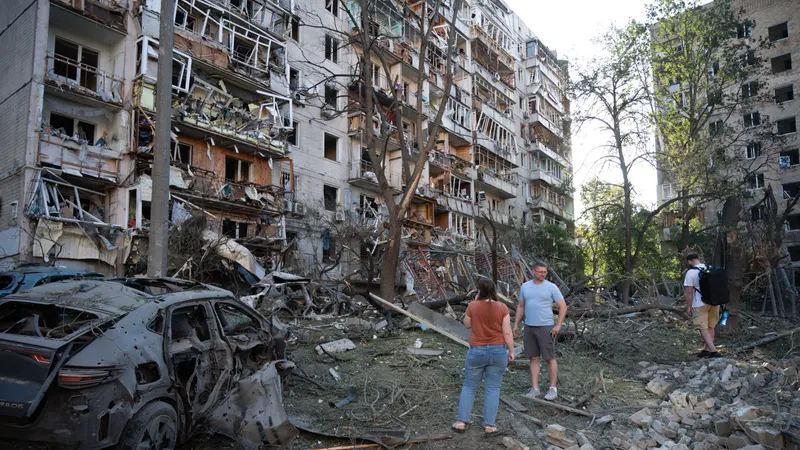
It comes with two caveats. First, a licence is a starting gun, not a magazine: production lines take years to tool, and the interceptors Ukraine needs this autumn will still have to come from existing stocks. Second, the new lines may not sit on Ukrainian soil at all — people familiar with the discussions have indicated manufacturing would likely happen in Germany or another European country, precisely so the plant does not become a target for the missiles it exists to defeat. That detail is telling. It is a plan drawn up by people who expect Russian strike campaigns to continue.
Which sits awkwardly beside the summit’s other register. Trump praised Zelensky’s willingness to reach a deal on ending the fighting and said he believed one was on the horizon. Zelensky, for his part, behaved like a man hedging against the horizon receding: nearly twenty bilateral meetings across the summit’s two days, new agreements with Estonia, the Netherlands and Denmark, and discussion of a 100-million-dollar support package from South Korea. Optimism from the podium, accumulation in the meeting rooms.
The drone package, announced on 7 July before the leaders had even gathered, tells the same story at alliance scale. Allies will invest more than 40 billion dollars over five years in counter-drone defences, drone procurement and operator training. The Drone Edge Initiative brings in twenty allied nations and — the quietly radical part — establishes a counter-drone marketplace in which systems are NATO-tested, NATO-compatible and available for purchase off the shelf. For an alliance whose procurement pathologies usually produce thirty-two incompatible national answers to the same problem, a pre-certified common catalogue is a structural fix, not a spending announcement. Alongside it: a commitment to train five times as many drone operators by the end of 2027, with the alliance’s Flight Training Europe programme extended to cover them; a contract worth hundreds of millions of dollars awarded by NATO’s procurement agency for jointly bought surveillance drones; and up to five MQ-4C Triton uncrewed surveillance aircraft, with Norway, Finland, Germany and Denmark signing letters of intent to join the purchase.
Read together, the Ankara outcomes are coherent in a way the rhetoric is not. The same summit at which the alliance’s most powerful leader predicted a deal was near also locked in two years of war funding, offshore missile production and a five-year drone build-out. That is not confusion. It is the hedge made policy: talk as if peace is close, and buy as if it is not. On the evidence of what was actually signed in Ankara, the buying is the belief.
Sources
- 1. NATO: The Ankara Summit Declaration — nato.int
- 2. The Ankara Summit Declaration (official text) — nato.int
- 3. NPR: Trump and Zelenskyy at the NATO summit — npr.org
- 4. NATO: Allies invest $40 billion in counter-drone capabilities and drone training — nato.int
- 5. DroneWatch: NATO unveils $40 billion investment in drones and counter-UAS — dronewatch.eu
- 6. Army Recognition: NATO approves $40 billion counter-drone initiative — armyrecognition.com
Senapathi Desk
Staff reports & analysis
The Senapathi Report news desk. Original reporting and analysis synthesised from multiple corroborated sources — defence procurement, service developments and regional security, filed as it happens.