
HAL to Restart Su-30MKI Production at Nashik as Rs 60,000 Crore Upgrade Takes Shape
HAL will build 12 new Su-30MKIs at Nashik with over 50 per cent indigenous content, delivering by 2029, as the IAF's largest fighter fleet enters a two-phase upgrade built around an India-made radar, reportedly worth about ₹60,000 crore.

Senapathi Desk
Staff reports & analysis
Published
3 min read
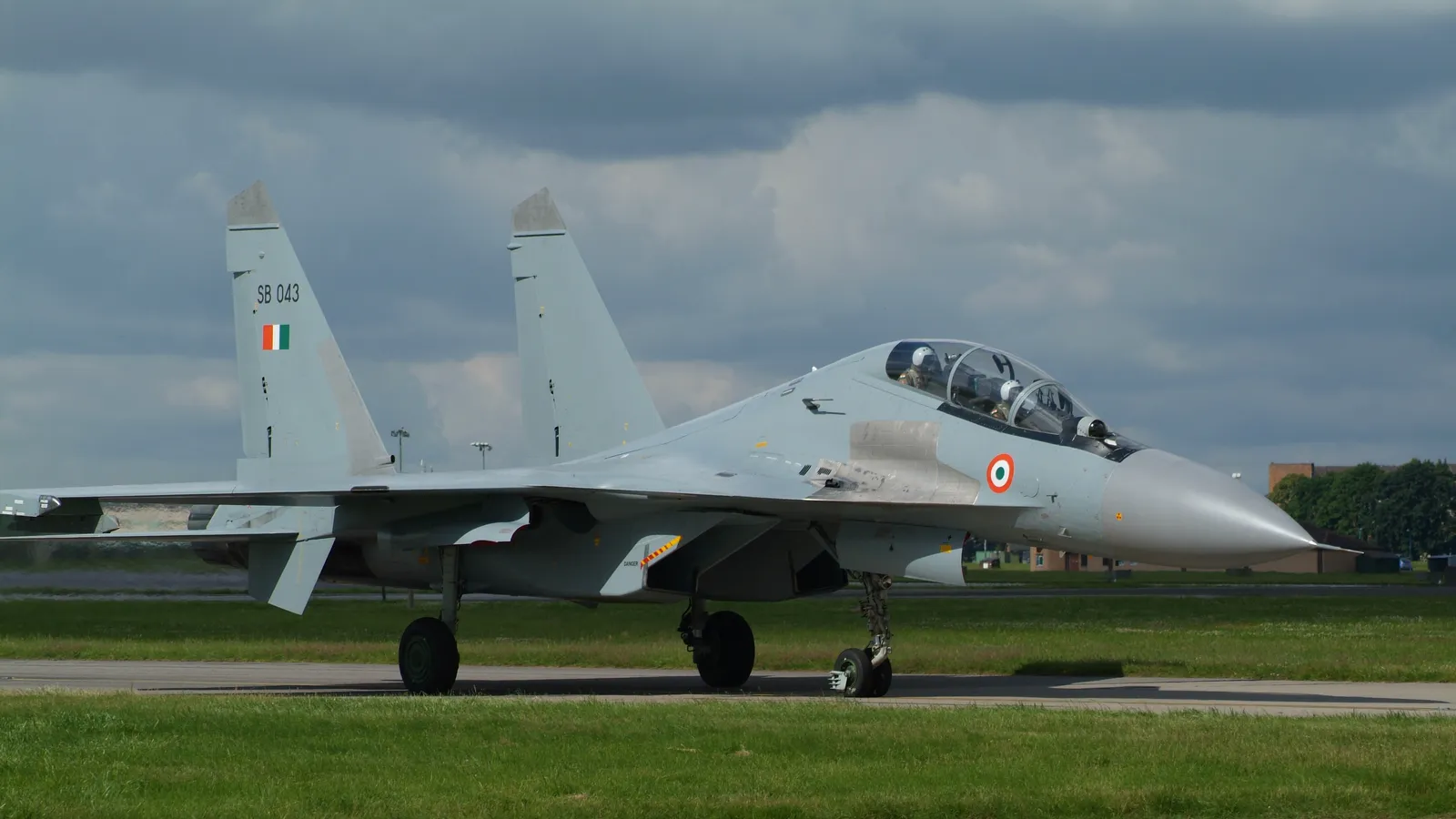
The fighter line at Nashik is coming back to life. Hindustan Aeronautics Limited is set to resume production of the Su-30MKI at its Maharashtra facility, building 12 new aircraft to make good the losses the fleet has suffered in accidents over the years, according to media reports of 10 August. The first of the new jets is expected to be handed over in 2027-28, and all 12 are to be delivered by 2029.
The order itself is modest. What it signals is not. The new aircraft are to carry more than 50 per cent indigenous content — a threshold that puts Indian vendors at the centre of every airframe delivered from a line that was, until now, dormant. Restarting it does more than replace lost tails: it keeps tooling, certified processes and a skilled workforce warm at exactly the moment Nashik is being lined up for a far bigger job.
That bigger job is a comprehensive upgrade of the existing Su-30MKI fleet, the largest in the Indian Air Force’s inventory. The modernisation is to be carried out at Nashik in two phases, with the Defence Research and Development Organisation and private-sector companies supporting the effort. Reports place the programme’s estimated value at about ₹60,000 crore, though no official announcement of that figure has come from the Ministry of Defence, and the final scope and price will only be firm once a contract is signed.
At the heart of the effort is a new India-made radar that will let the fighter detect and engage targets at much greater distances than it can today. For an air force whose combat mass rests on this one type, the sensor is the decisive piece: it determines how far the jet sees, how early it shoots and how long the platform stays credible against newer opposition. Building that radar at home, rather than importing it, also means future iterations can be pushed into the fleet on India’s own schedule.
The structure of the programme is as significant as its content. Bringing private industry into depot-level modernisation of a frontline fighter, alongside a state-owned integrator and a government research establishment, would spread work that has historically stayed inside public-sector walls. If the model holds, the companies that cut their teeth on Su-30MKI phase one will be positioned for phase two and for whatever upgrade cycles follow across other fleets.
What happens next will show whether the plan converts from reportage to contract. The first marker is a formal order for the 12 new aircraft and a public delivery schedule against the 2027-28 target for the first jet. The second is the sanction of the upgrade programme itself, which would confirm or correct the reported ₹60,000 crore estimate and define what each phase contains. The third is the announcement of work shares — which private firms take what, and how much of the radar and mission-system integration happens outside government facilities.
The timelines are tight by historical standards: first new-build delivery in roughly two years, the full dozen within four, with a two-phase fleet-wide modernisation running through the same facility. Nashik has delivered this aircraft before at scale. The question the next 18 months will answer is whether it can now do two jobs at once — build new fighters and rebuild old ones — while carrying more Indian content than the line has ever handled.
Sources
- 1. Su-30MKI fleet set for big capability upgrade with 12 new jets — theweek.in
- 2. HAL to restart Su-30MKI production at Nashik facility — businesstoday.in
- 3. HAL to build 12 new Su-30MKIs at Nashik — indiandefensenews.in
Senapathi Desk
Staff reports & analysis
The Senapathi Report news desk. Original reporting and analysis synthesised from multiple corroborated sources — defence procurement, service developments and regional security, filed as it happens.