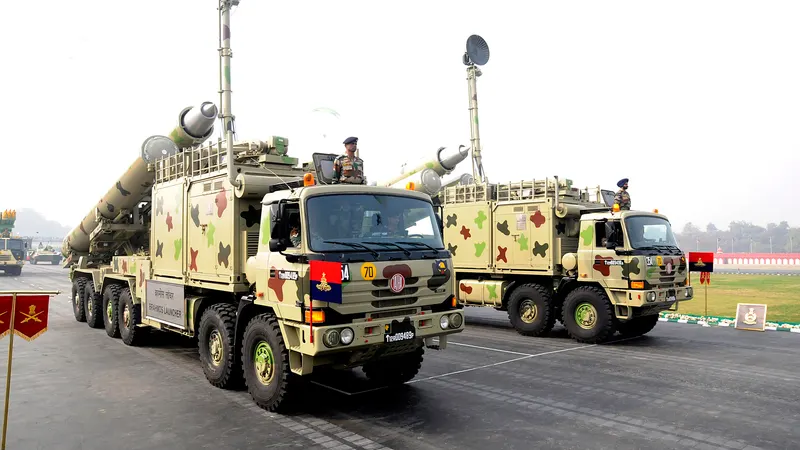
Rajnath Clears Blanket DRDO Technology Transfer for Every Conventional Missile System
A single approval on 25 August opens DRDO's entire conventional missile portfolio to Indian industry, from public-sector builders to private primes and MSMEs. Which systems, which firms and on what terms remain unanswered.

Senapathi Desk
Staff reports & analysis
Published
4 min read
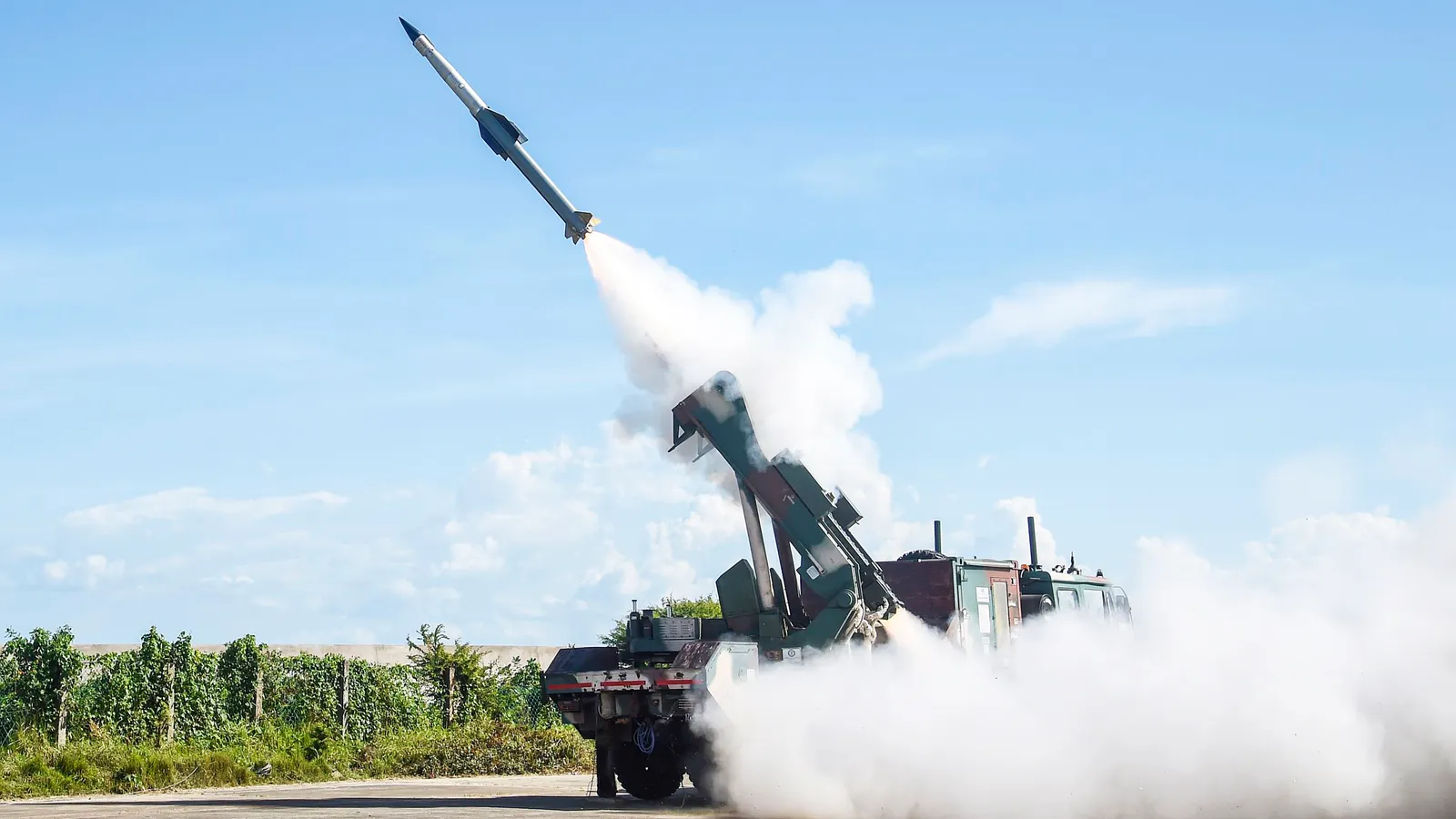
Every conventional missile DRDO has designed is now, in principle, on offer to Indian industry. On 25 August, Defence Minister Rajnath Singh approved the transfer of technology for all conventional missile systems developed by the Defence Research and Development Organisation to the Indian defence industry, for production within the country. One sentence of policy now stands where a decision per programme used to, and that is what makes it worth reading closely.
It matters now because of arithmetic. India’s Defence Acquisition Council cleared roughly Rs 52,000 crore of proposals on 3 July alone, a package weighted toward layered air defence and counter-drone weapons that included a Medium Range Surface-to-Air Missile system, a Very Short Range Air Defence System and man-portable anti-tank guided missiles. Acceptance of Necessity is an administrative gate, not a contract; tenders, trials and price negotiation follow. But every one of those tenders needs a production line behind it, and a design laboratory cannot build at the volumes a three-service order book now demands. The technology-transfer approval is the industrial hinge on which that demand turns from paper into hardware.
What was actually approved
The ministry’s statement is spare. The Raksha Mantri has approved the transfer of DRDO-developed technologies of all conventional missile systems to the Indian defence industry for production in the country. Production is to be undertaken “as per applicable qualifications, certifications and regulatory requirements”. DRDO is to facilitate both the transfer and the absorption of the technologies. The stated aims are to enable the transition of missile development to industrial production, strengthen the defence industrial base, create supply-chain opportunities for Indian MSMEs and technology partners, enhance operational capability, reduce import dependence and raise domestic value addition. The ministry called the decision “an important milestone in promoting greater participation of the domestic industries” and “part of DRDO’s continuing efforts to leverage the capabilities of Indian industry”.
That is the entire public record. No missile is named. No company is named. No timeline is given.
Why “all” is the operative word
DRDO has handed missile technology to industry before, one system at a time, typically to a designated production agency. The Astra beyond-visual-range air-to-air missile is the template: designed by DRDO, built by Bharat Dynamics, and this year the first Indian air-to-air weapon exported, to Indonesia. What changed on 25 August is that the case-by-case model has been replaced by a standing offer. A firm that meets the qualification and certification bar can, in principle, seek the technology for any conventional missile in DRDO’s portfolio without waiting for a bespoke ministerial decision on that system.
The qualifier “conventional” is doing quiet but important work. It draws a line around the strategic arsenal, which is not part of this offer. Inside the line sits everything else DRDO has fielded or is fielding for the three services: tactical surface-to-surface weapons such as Pralay, the Quick Reaction Surface-to-Air Missile, the Astra family, and the anti-tank and very-short-range air-defence categories that featured in the July clearances. Which of these come first, and whether the ministry intends a phased release or a genuinely open catalogue, is not stated.
The three unanswered questions
The first is which systems. “All” is a policy direction, not a list, and industry will want a list. Missiles still in development trials sit in a different category from those already in serial production, and the statement does not distinguish between them.
The second is which firms. The announcement names the Indian defence industry, MSMEs and technology partners as intended participants, language broad enough to cover the public-sector undertakings that have historically built missiles, the private primes building up integration capacity, and the component makers below them. Whether more than one firm can hold the technology for the same missile, and whether private companies can be lead integrators rather than subcontractors, will decide whether this is a competition policy or a supply-chain policy.
The third is on what terms. Transfer fees, intellectual-property ownership, whether DRDO remains the design authority for changes, and whether licensees may export are all left open. The single condition it does spell out, that production must meet applicable qualifications, certifications and regulatory requirements, puts the real gate not in the ministry’s letter but in the certification regime. A firm with intent but without accredited facilities, quality systems and safety clearances will find the door open and the room still locked.
What to watch
The announcement’s own framing, a transition from development to industrial-scale production, is the measure to hold it against. The proof will be the first named system, the first named licensee and the first published terms. Until then, India has a policy generous in scope and silent on mechanism: a considerable improvement on having neither, and still a long way from serial production.
Sources
- 1. DD News: Rajnath Singh approves transfer of DRDO missile technologies to Indian defence industry — ddnews.gov.in
- 2. idrw: Raksha Mantri approves transfer of technology of DRDO-developed missile systems to Indian industry — idrw.org
- 3. PIB: Raksha Mantri approves transfer of technology of DRDO-developed missile systems — pib.gov.in
- 4. CNBC-TV18: Rajnath Singh approves transfer of all DRDO missile tech to Indian companies — cnbctv18.com
- 5. Times of India: Rajnath Singh approves transfer of DRDO missile technology to Indian defence industry — timesofindia.indiatimes.com
- 6. DD India: Rajnath Singh approves transfer of DRDO missile technologies to Indian defence industry — ddindia.co.in
Senapathi Desk
Staff reports & analysis
The Senapathi Report news desk. Original reporting and analysis synthesised from multiple corroborated sources — defence procurement, service developments and regional security, filed as it happens.