
Lockheed Martin Wins THAAD Production Contract Worth Up to $35.3 Billion
The seven-year award, among the largest missile-production contracts on record and tied to the Golden Dome build-out, signals that interceptor capacity is now an industrial race — and the United States is paying to win it.

Senapathi Desk
Staff reports & analysis
Published
2 min read
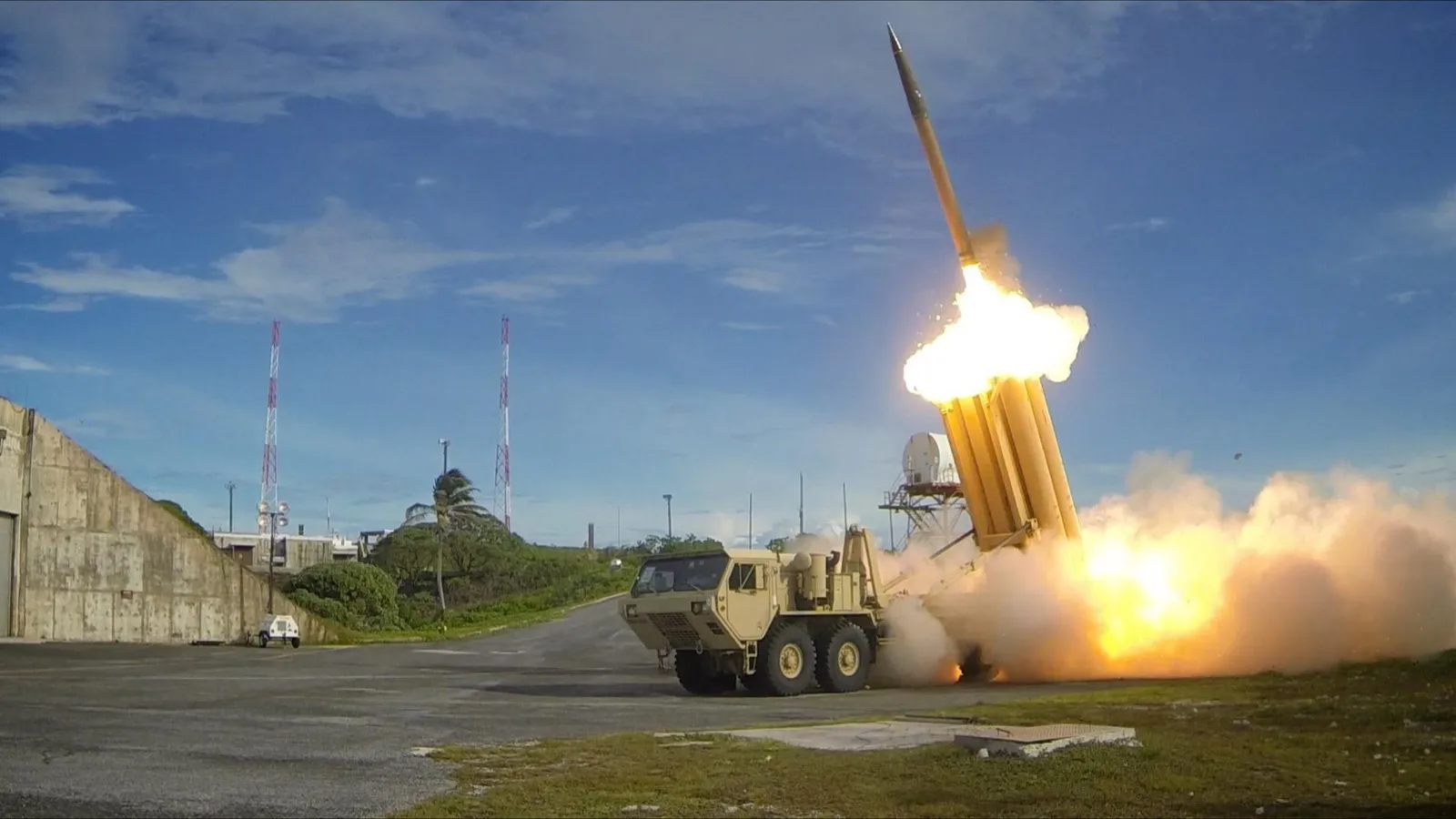
The number is the story. On June 29 the US Department of Defense announced a contract worth more than $35 billion — up to $35.3 billion — for Lockheed Martin to produce THAAD interceptors. Single awards of this size are usually reserved for aircraft carriers, submarine blocks or fighter programmes. This one is for missiles that exist to shoot down other missiles, and that inversion tells you where the United States now believes its most urgent capability gap sits.
The structure matters as much as the headline figure. This is a seven-year undefinitized contract action, meaning work begins before the final price and terms are settled. Governments use that instrument for one reason: speed. The United States has decided that waiting for a fully negotiated deal costs more, in strategic terms, than accepting pricing risk up front. That is a procurement system openly trading discipline for tempo — a choice defence ministries almost never make in peacetime.
Consider the incentives it creates. Interceptor production has long been constrained not by technology but by capacity, because no contractor builds expensive production lines against uncertain orders. A seven-year commitment with a ceiling above $35 billion removes that uncertainty at a stroke. Lockheed Martin had already planned roughly $9 billion of investment in new missile production lines; this award converts that from a corporate bet into an underwritten expansion. With the Golden Dome architecture as the anchor customer, the company can hire, tool and contract with sub-tier suppliers against guaranteed demand rather than projected demand. That is how industrial capacity actually gets built.
The constraints are equally real. A contract buys intent, not rockets. Expanding interceptor output at this scale pushes the bottleneck downward, into energetics, seekers, specialised components and skilled labour — tiers of the supply chain that cannot be scaled by signature. And the undefinitized structure cuts both ways: once the government is committed and lines are running, negotiating leverage on final pricing shifts toward the contractor. The United States is betting that volume and urgency justify that concession.
The second-order effects arrived quickly. Markets read the award plainly, with the company’s shares rising about 6.1 percent after the missile-defence awards and an index change. A day later, the June 30 contracts list showed the same firm taking a further Army award of nearly $3 billion for Sentinel work. Two strategic programmes, one prime contractor, roughly $38 billion across 48 hours: the concentration of deterrence-critical production in a single company is itself a policy outcome, with all the single-point-of-failure questions that implies.
For everyone else, the signal is uncomfortable. Allies who buy THAAD now join a queue behind a domestic build-out of historic size. Adversaries will note that the standard critique of missile defence — that cheap offensive missiles always out-cost expensive interceptors — is being answered not with argument but with production volume. And for countries such as India that are weighing their own layered air-and-missile-defence ambitions, the lesson is blunt: interceptor capability is no longer chiefly a technology contest. It is an industrial one, and the entry fee is a multi-year demand guarantee large enough to make private capital move. The United States just published the price.
Sources
- 1. Defence contract roundup: Lockheed Martin awarded $35.3 billion for THAAD missiles — huntsvillebusinessjournal.com
- 2. Why Lockheed Martin shares climbed after the missile-defence awards — finance.yahoo.com
- 3. Lockheed Martin wins mega contract for Golden Dome THAAD missiles — nationalinterest.org
- 4. US Department of Defense contracts list for June 30, 2026 — war.gov
Senapathi Desk
Staff reports & analysis
The Senapathi Report news desk. Original reporting and analysis synthesised from multiple corroborated sources — defence procurement, service developments and regional security, filed as it happens.